Many product teams finalize their plastic part design in CAD and rush straight to tooling, only to face unexpected tooling rework and expensive mold revisions once high-volume production begins. Even minor design flaws that go unnoticed without a proper DFM review can trigger sink marks, warpage, short shots, and assembly failures. These manufacturability issues not only add thousands of dollars in unplanned costs but also delay mass production timelines and hurt product consistency.
Design for Manufacturability (DFM) for injection molding is the most critical pre-production step to eliminate manufacturing risks. By following standardized engineering rules during the design phase, you can avoid late-stage mold modifications, stabilize part quality, and ensure smooth, efficient high-volume injection molding.
This guide shares actionable DFM best practices tailored for custom plastic components, helping designers and manufacturers cut unnecessary tooling costs.
1. Maintain Consistent Wall Thickness for Stable High-Volume Molding
Wall thickness uniformity is the core of reliable high-volume production. Uneven wall sections lead to inconsistent cooling speeds, which are the primary cause of warpage, sink marks, voids, and residual stress in molded parts — defects that multiply drastically during mass production.
Key DFM Tip: Avoid thickening local walls to strengthen part rigidity. Adding structural ribs is a far more manufacturable solution and reduces defect risks in mass production.
2. Optimize Ribs and Bosses to Prevent Sink Marks
Ribs and mounting bosses are essential structural features in plastic part design, yet they are the most common cause of cosmetic defects and the top reason for tooling rework requests. Improper sizing creates thick material accumulations that cool slowly and leave visible sink marks on exterior surfaces.
-
Control rib thickness at 60%–80% of the adjacent nominal wall thickness to eliminate sink marks on cosmetic faces.
-
Add smooth fillets at rib-wall intersections to improve plastic flow, reduce air trapping, and lower mold wear during long-term high-volume runs.
-
Hollow out oversized mounting bosses and avoid thick base sections to reduce material mass and uneven cooling.
-
Limit rib height appropriately to prevent ejection difficulties and part cracking during demolding in continuous production.
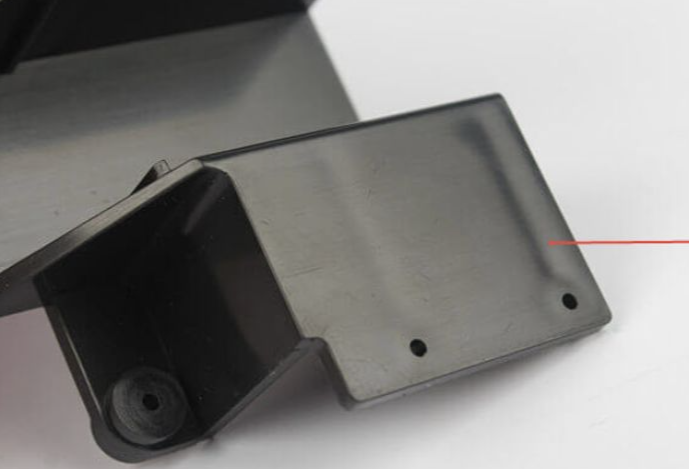
3. Apply Standard Draft Angles for Flawless Ejection
Insufficient or zero draft angles are frequent oversights in initial plastic part design. Without proper draft, parts stick tightly to mold cores and cavities, causing scuffing, surface damage, and part deformation during ejection. This issue becomes catastrophic in high-volume production, leading to high reject rates and frequent mold maintenance.
-
Smooth finished parts: reserve 0.25°–0.5° minimum draft per side.
-
Textured surface parts: increase draft to 0.5°–1.5° per side to match texture depth.
-
Pay extra attention to hidden zero-draft zones, including internal ribs, blind holes, and inner bosses — these are commonly missed during basic design checks and only discovered during mold testing.
4. Add Fillets to Eliminate Sharp Internal Corners
Sharp 90° internal corners are a major manufacturability flaw. They create melt flow dead zones, trap air, generate concentrated residual stress, and cause uneven cooling. In long-term high-volume production, these issues lead to consistent part defects and shortened mold service life.
-
Replace all functional internal sharp corners with a minimum 0.5 mm fillet where design allows.
-
Smooth rounded flow paths improve injection efficiency, reduce molding pressure, and stabilize part dimensional consistency.
-
Uniform fillet design also minimizes mold steel stress, lowering the risk of mold damage and subsequent mold revisions.
5. Resolve Undercut Issues During Early DFM Review
Undercut features block direct part ejection and require complex mold mechanisms such as sliders and lifters. Undercut problems identified after mold steel cutting are one of the costliest causes of tooling rework. A thorough DFM review in the design stage can avoid these expensive revisions.
-
Evaluate all undercut structures in your CAD file before mold initiation.
-
Non-essential undercuts are best removed via design optimization to simplify mold structure, lower tooling costs, and improve production stability.
-
For necessary functional undercuts, confirm slider or lifter solutions upfront to reserve mold space and avoid late structural modifications.
6. Adapt DFM Rules to Different Molding Materials
Universal DFM standards do not apply to all resins. Material properties directly determine shrinkage rate, warpage tendency, and flow performance — making material-specific design adjustments essential for stable high-volume production.
-
General plastics (PP, ABS, PC+ABS): Cost-effective housing materials. Standard DFM wall and draft design eliminates sink marks and ensures smooth mass production.
-
High-temperature plastics (PC, PA66, PBT): Precision engineering plastics with fast cooling. Accurate shrinkage compensation ensures stable dimensional accuracy in high-volume runs.
-
Flexible materials (TPE, LSR): Soft resins for seals and medical parts. Even wall thickness and optimized structures prevent flash and deformation during over-molding production.
-
Glass-filled materials (PP-GF30, PPS): High-strength industrial plastics prone to warpage. Uniform walls and smooth fillets in DFM design stabilize mass production and avoid mold rework.
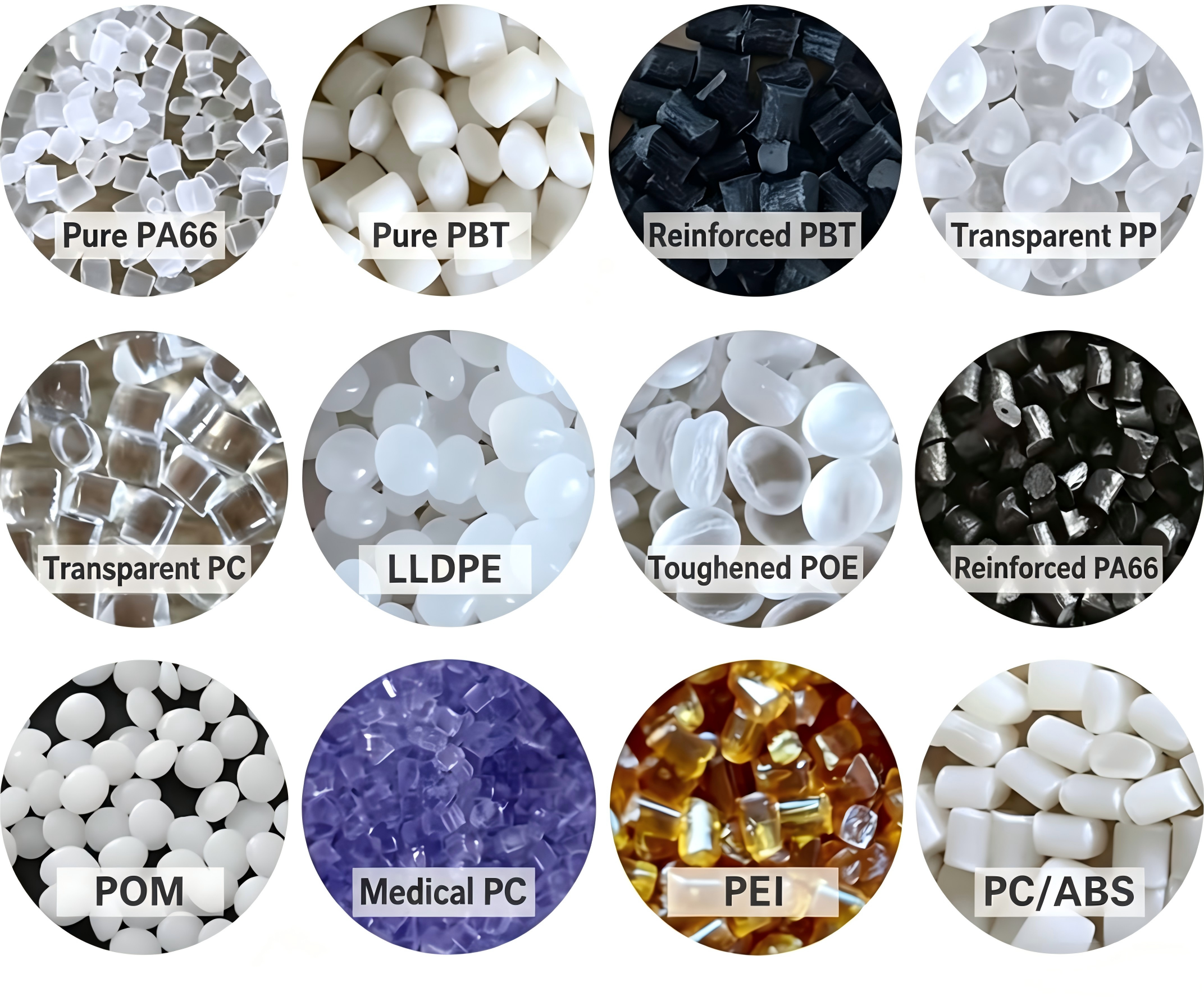
Always confirm the final production resin with your molding supplier before formal DFM review and tooling launch.
7. Avoid Over-Specified Tolerances to Reduce Production Risks
Overly strict, unnecessary tolerances are a common mistake in plastic part design. Ultra-tight tolerance requirements greatly increase mold manufacturing difficulty, raise production reject rates, and drive up overall costs — without adding actual product value.
-
Reserve tight tolerances only for critical functional and mating surfaces.
-
Apply standard commercial injection molding tolerances to non-cosmetic, non-matching areas.
Investing time in DFM optimization is the most cost-effective way to shorten lead times, control budget, and achieve consistent mass production of custom injection molded parts.
Get Expert DFM Review for Your Next Project
Need a professional manufacturability assessment for your plastic part design? In JBRplas, our experienced engineering team provides detailed DFM review reports covering wall thickness, draft angles, undercut optimization, material adaptability, and tolerance analysis. We help you eliminate potential molding defects, avoid expensive tooling rework, and launch stable high-volume production faster.