The global plastic injection molding market maintains steady growth, with 2026 industry data valuing it at USD 25.37 billion and a 5.94% CAGR projected through 2034, driven by rising demand for high-volume, consistent plastic component manufacturing. Notably,68% of late-stage mold rework, production delays, and cost overruns stem from non-manufacturable part designs unfit for injection molding.
Design for Manufacturing (DFM) acts as a critical bridge between product design and mass production. Standardized DFM optimization is a prerequisite for zero-defect, low-cost, and high-efficiency injection molding mass production. This blog outlines professional DFM-based pre-production preparation workflows for plastic parts to help manufacturers eliminate production risks and achieve stable large-scale manufacturing.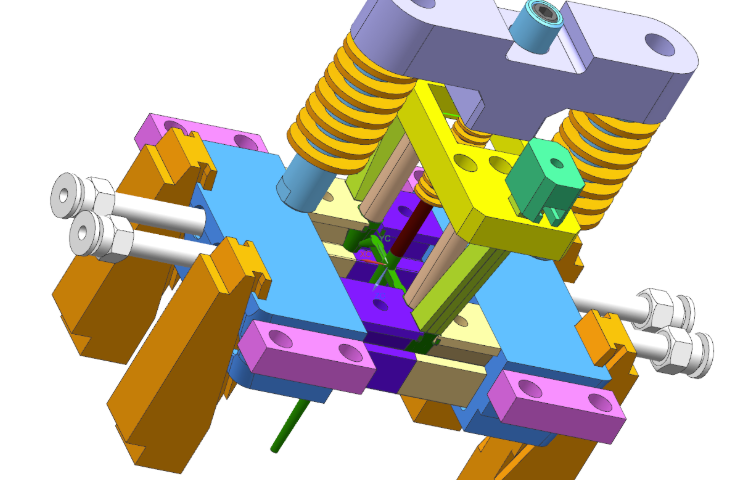
Most designers prioritize part functionality and aesthetics while overlooking injection molding process characteristics, commonly causing sink marks, voids, short shots, warpage, and demolding issues in mass production. These defects directly lower production yield, trigger repeated mold rework, extend lead times, and escalate manufacturing costs.
Industry data confirms the significant value of DFM optimization for injection molding. Professional DFM reviews resolve 95% of potential molding defects at the design stage. DFM-optimized parts deliver a production cycle stability of ±1.2%, compared to ±4.8% for unoptimized designs. Additionally, DFM cuts production waste rates from 6.3% to 0.8% and extends mold service life by up to 60%. For batch production of 100,000+ units, these optimizations deliver substantial annual cost savings and secure long-term production stability.
DFM analysis has become a standardized pre-production procedure, capturing 29.6% of the 2025 global injection molding design service market (valued at USD 370.12 million), reflecting widespread industry recognition of its necessity for reliable mass production.
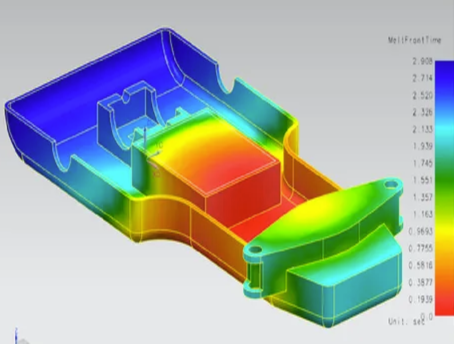
Uneven wall thickness is the leading cause of sink marks, voids, and warpage in plastic parts. Production data shows wall thickness deviations exceeding 20% push continuous production defect rates above 45%. Standard DFM guidelines require wall thickness fluctuations to be controlled within ±10% of the nominal value.
For general plastics (PP, ABS, PC), the optimal mass-production wall thickness ranges from 1.5–3.0mm, while high-performance materials (PEEK, PPS) require 2.0–4.0mm to balance filling efficiency and structural stability.
Cooling system design determines injection cycle time and mass production capacity. Industrial cases show upgrading traditional straight cooling channels to baffle-type conformal structures cuts single-part cycle time from 45s to 28s, delivering a 38% efficiency boost.For an annual output of 500,000 units, this optimization unlocks over 1,400 valid machine hours yearly, expanding production capacity without additional equipment investment.
Meanwhile, standardized DFM runner design minimizes material residue and waste, further improving material utilization in mass production.
|
Production Stage
|
Core Work Content
|
Key Standards & Support
|
Core Production Benefits
|
|---|---|---|---|
|
Stage 1: Full DFM Design Audit(24-Hour Rapid Evaluation)
|
Inspect part drawings for structural manufacturability (wall thickness, draft, fillet, gating, cooling layout); assess risks and identify potential molding defects.
|
Comply with SPI 2025 mold standards; support Moldflow simulation; deliver complete DFM audit report within 24 hours.
|
Eliminate design-driven invalid mold opening, cut pre-production risks by 90% and avoid cost & schedule losses.
|
|
Stage 2: Targeted Optimization & Verification
|
Optimize unqualified structures per DFM report; adjust design and mold scheme based on material properties; verify solutions via simulation.
|
Custom mold configuration: aluminum molds for small/medium batches; H13/718H hardened steel molds for 1M+ high-volume production.
|
Match design, material and injection process perfectly, stabilize yield and minimize mold rework.
|
|
Stage 3: Mold Trial & Parameter Calibration
|
Conduct mold trials; calibrate core parameters (pressure, temperature, holding, cooling); fine-tune processes to eliminate batch differences.
|
Adopt industry-standard baseline parameters with personalized adjustments for specific part structures.
|
Achieve trial yield over 98%, resolve common defects and complete pre-mass-production process validation.
|
|
Stage 4: SOP Rollout & Stable Delivery
|
Form standardized production SOPs with verified optimal parameters; realize automated batch production and real-time quality monitoring.
|
Adapt to 2026 mainstream all-electric injection molding equipment; support digital full-process management.
|
Cut energy consumption by 30%–50%, stabilize batch consistency, shorten lead time and enable low-cost efficient production.
|

While many manufacturers overlook DFM as a non-essential step, mass production data proves it is the most cost-effective pre-production investment, delivering tangible long-term value in three key aspects:
Cost Saving: Reduce mold rework rate by 95%, cut production waste rate from 6.3% to 0.8%, and greatly reduce post-production quality maintenance costs .
Efficiency Improvement: Shorten injection molding cycle by 30%–40%, improve annual production capacity by 35%+, and effectively shorten order delivery cycles .
Quality Stability: Control production cycle fluctuation within ±1.2%, realize batch product consistency, reduce after-sales quality complaints, and enhance brand supply credibility .