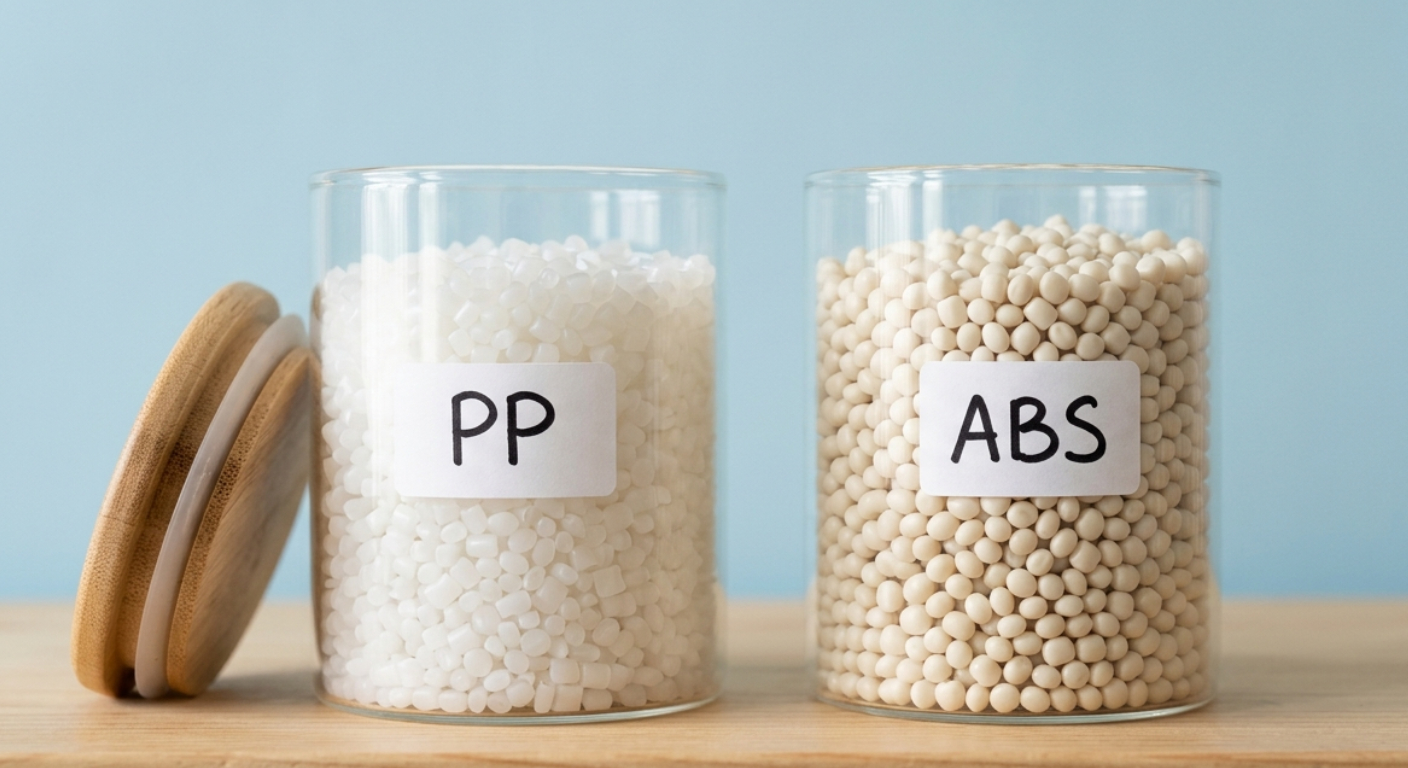
PP (Polypropylene) and ABS (Acrylonitrile Butadiene Styrene) are two of the most widely used engineering plastics in manufacturing. While both are thermoplastics with valuable properties, they excel in different applications. Understanding their differences will help you select the right material for your project.
| Property | PP (Polypropylene) | ABS (Acrylonitrile Butadiene Styrene) |
|---|---|---|
| Density | 0.90–0.92 g/cm³ (lighter) | 1.04–1.06 g/cm³ (heavier) |
| Temperature Resistance | Melting point: 160–170°C; max service: ~100°C | Melting point: 220–230°C; max service: ~80°C |
| Impact Strength | Good; lower at low temperatures | Excellent; good even at low temperatures |
| Chemical Resistance | Excellent against acids, bases, solvents | Good; weaker against strong solvents and aromatics |
| Cost | Lower (~$0.80–$1.50/kg) | Higher (~$1.50–$3.00/kg) |
| Surface Finish | Good; can be glossy or matte | Excellent; superior aesthetic appeal |
| Processability | Easy; lower processing temperatures | Moderate; higher temperatures required |
| Rigidity | Lower stiffness | Higher stiffness and hardness |
| UV Resistance | Poor; requires UV stabilizers | Moderate; better than PP without additives |
| Food Contact | FDA-approved grades available | Generally not suitable for food contact |
PP has a lower melting point and is best suited for applications where temperatures stay below 100°C. It's ideal for kitchen containers, food storage, and microwave-safe products. ABS, with its higher melting point, can handle more demanding thermal environments and works better in applications exposed to moderate heat, such as automotive components and industrial equipment.
ABS outperforms PP in impact strength, particularly at low temperatures. If your product needs to withstand drops, shock, or physical stress—especially in cold climates—ABS is the superior choice. This is why ABS dominates in consumer electronics, power tools, and protective gear. PP, while reasonably tough, becomes brittle in freezing conditions.
PP is remarkably resistant to chemicals, including strong acids, bases, and most solvents. This makes it the go-to material for chemical storage containers, pipes, and laboratory equipment. ABS, while chemically stable in many scenarios, can be degraded by strong organic solvents and aromatics, limiting its use in certain chemical applications.
ABS offers superior surface finish and visual appeal, making it the preferred choice for consumer-facing products like laptop shells, gaming consoles, and phone casings. It accepts colorants beautifully and can achieve a high-gloss finish with minimal effort. PP can look good but requires more post-processing to achieve the same aesthetic level.
PP is significantly more affordable than ABS, making it the economical choice for high-volume production of cost-sensitive items like plastic bags, hinges, and disposable containers. ABS's premium pricing reflects its superior performance characteristics.
PP is easier to process due to its lower melting temperature, shorter cooling times, and lower processing pressures. This translates to faster production cycles and lower energy costs. ABS requires higher processing temperatures and longer cooling times, which increases manufacturing complexity and cost.
Ask yourself these questions to choose the right material:
1. What temperature will the product experience?
2. Will it endure physical impact or stress?
3. What's the chemical exposure?
4. Is aesthetics important?
5. What's your budget?
6. Will it contact food?
Some manufacturers use blended materials or layered designs to combine the best of both worlds:
Choosing between PP and ABS isn't about one being universally better—it's about matching material properties to your specific application requirements. PP excels in chemical resistance, cost-effectiveness, and thermal tolerance for moderate heat. ABS delivers superior impact strength, aesthetics, and performance in demanding mechanical applications. By evaluating your product's temperature range, mechanical stresses, chemical exposure, and budget constraints, you'll make the right material choice that balances performance, cost, and manufacturability.