For product and mechanical engineers, injection molding design is never just about drawing a functional part. Great molding design balances performance, aesthetics, manufacturability, and cost efficiency. Small oversights in material selection or structural design often lead to delayed launches, defective batches, and inflated production costs.
With 30+ years of precision injection molding experience, JBRplas breaks down the core design principles every engineer needs to master for flawless mass production, from material selection to mold tooling optimization.
1. Material Selection: Lay a Solid Foundation for Production
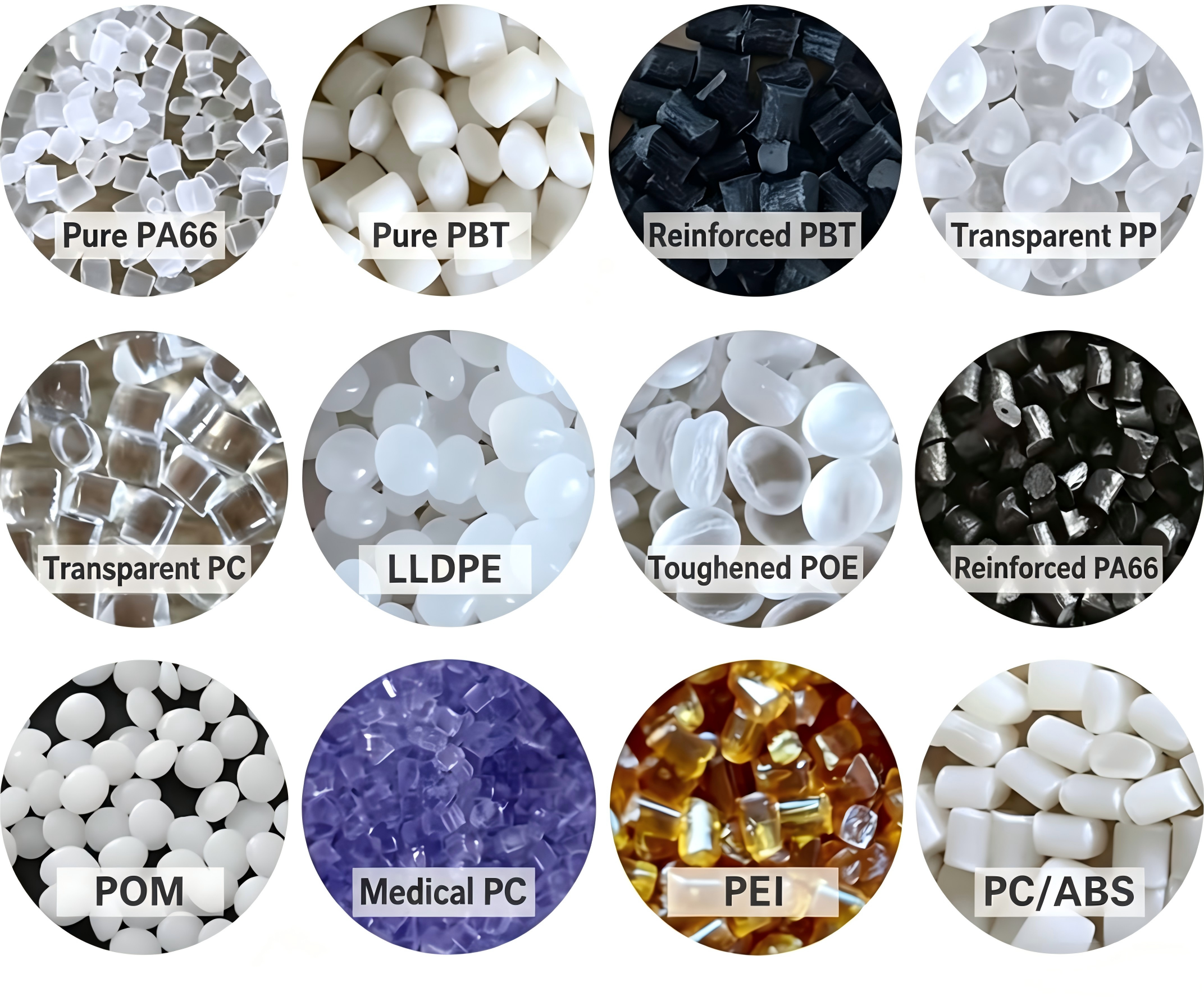
Resin material is the core determinant of a part’s final performance—including structural strength, high-temperature resistance, corrosion stability, surface texture, and service life. Different application scenarios demand targeted material matching, which is the first step to avoid subsequent production risks.
We support a full range of mainstream and customized molding resins for industrial, medical, automotive and consumer product applications:
-
General-purpose resins: PP, PE, ABS
-
Engineering resins: PC, Nylon (PA), TPE/TPU
-
Specialized resins: Medical-grade sterile resins, UV-stable weather-resistant resins and other custom materials
Early material confirmation enables our engineering team to pre-judge shrinkage rate, molding temperature and pressure parameters, effectively avoiding design rework caused by material mismatch.
2. DFM Optimization: Cut Costs & Shorten Lead Times at the Design Stage
DFM (Design for Manufacturability) is the most critical link to eliminate production defects in advance. Many parts with perfect 3D drawings cannot be mass-produced stably due to unreasonable structural design. At JBRplas, we conduct one-stop professional DFM analysis and Moldflow simulation for all projects before mold opening, optimizing part structure and molding parameters to ensure smooth subsequent production.
The core DFM optimization points for injection molding are summarized as follows:
Uniform Wall Thickness
Uneven wall thickness is the main cause of sink marks, voids, warpage and part deformation. We recommend a conventional wall thickness of 0.080–0.160 inches (adjusted according to material characteristics). Thick and thin wall transitions must be gentle and smooth, with no abrupt changes. For lightweight and high-strength requirements, set ribs at 70% of the adjacent wall thickness to enhance structural stability without increasing molding risks.
Standardized Structural Features (Ribs, Bosses, Fillets)
Reasonable structural design balances strength and moldability: The rib height is controlled within 3 times the wall thickness to avoid filling difficulties; mounting bosses are matched with gusset reinforcement to prevent breakage; rounded fillets replace sharp corners to reduce stress concentration and optimize molten plastic flow trajectory.
Scientific Gating & Cooling System Design
Gate type, size and placement directly affect filling uniformity and part surface quality. Our team selects optimal edge gates, tunnel gates or fan gates according to part geometry and appearance requirements. Meanwhile, we customize balanced cooling and venting systems to speed up cycle efficiency, eliminate trapped air, and greatly reduce defective rates.
3. Prevalent Injection Molding Defects & Design Avoidance Strategies
Most molding defects stem from unreasonable design rather than production errors. Targeted optimization can solve most quality problems from the source:
-
Short Shots: Caused by excessive material viscosity or unreasonable injection pressure parameters. Optimize runner/gate structure and adjust molding process parameters to ensure full cavity filling.
-
Flash (Burrs): Resulting from insufficient mold clamping force or unstandardized venting design. Precision mold fitting and scientific vent layout can completely avoid this problem.
-
Warpage & Deformation: Mainly caused by uneven wall thickness and inconsistent cooling speed. DFM structural optimization and balanced cooling design are the core solutions.
We verify and iterate design schemes through pre-production simulation and sample testing to ensure zero-defect mass production.
4. Precision Tooling: Guarantee Long-Term Stable Mass Production
Mold quality determines the upper limit of part quality and production efficiency. As a manufacturer with full in-house tooling capabilities, JBRplas independently completes mold design, processing, assembly and debugging, focusing on the following core tooling details:
-
Configure reasonable cavity quantity according to customer production volume to balance cost and efficiency
-
Customize cooling and ejection systems based on part structure to stabilize cycle time
-
Reserve precise shrinkage tolerance according to resin characteristics to ensure dimensional accuracy
-
Select matching mold steel according to material corrosion and wear characteristics to extend mold service life
We support various complex molds including two-plate molds, three-plate molds, multi-cavity molds, hot runner molds and thread unscrewing molds to meet diverse customized production needs.
Why Partner with JBRplas for Injection Molding Projects?
Founded in 1995, JBRplas is an ISO 9001 & ISO 13485 certified one-stop injection molding solution provider, integrating mold development, mass production, surface secondary processing and finished product assembly. With a 10,000㎡+ standardized factory, advanced all-electric injection molding equipment and cleanroom production environment, we have served global customers in medical, industrial, automotive and precision consumer electronics industries for 30 years.
Our core advantages lie in vertical integrated services and strict quality control: independent full-process production realizes single-source quality responsibility; standardized production management achieves complete product traceability; professional project management team tracks the whole process from design, tooling, sampling to mass production, ensuring on-time delivery and compliant quality.
Have a new molding product design or optimization demand?
The JBRplas professional engineering team provides free DFM evaluation, material selection consultation and customized molding solutions. Contact us to start your project and achieve efficient, low-cost and high-quality molding production!