When you see a perfect
plastic part, you praise its material or design. But when you see a warped, shrunken, or flawed part, the problem often lies hidden in an unseen world—the mold.
An old saying in the injection molding industry goes: "The mold accounts for seventy percent, the process for thirty." Even the most advanced injection molding machine cannot salvage a poorly designed mold. Mold design is the critical bridge connecting product conception to mass manufacturing. Today, we delve into some often-overlooked mold design details that can ultimately determine the life or death of your product.
Detail One: The Gating System – The Melt's "Highway"The gating system is the channel through which plastic melt flows from the nozzle into the cavity. Its design quality directly determines the flow pattern, pressure, and efficiency of filling.
· The Gate: The "Terminus" of the Runner, The "Starting Point" of the Cavity
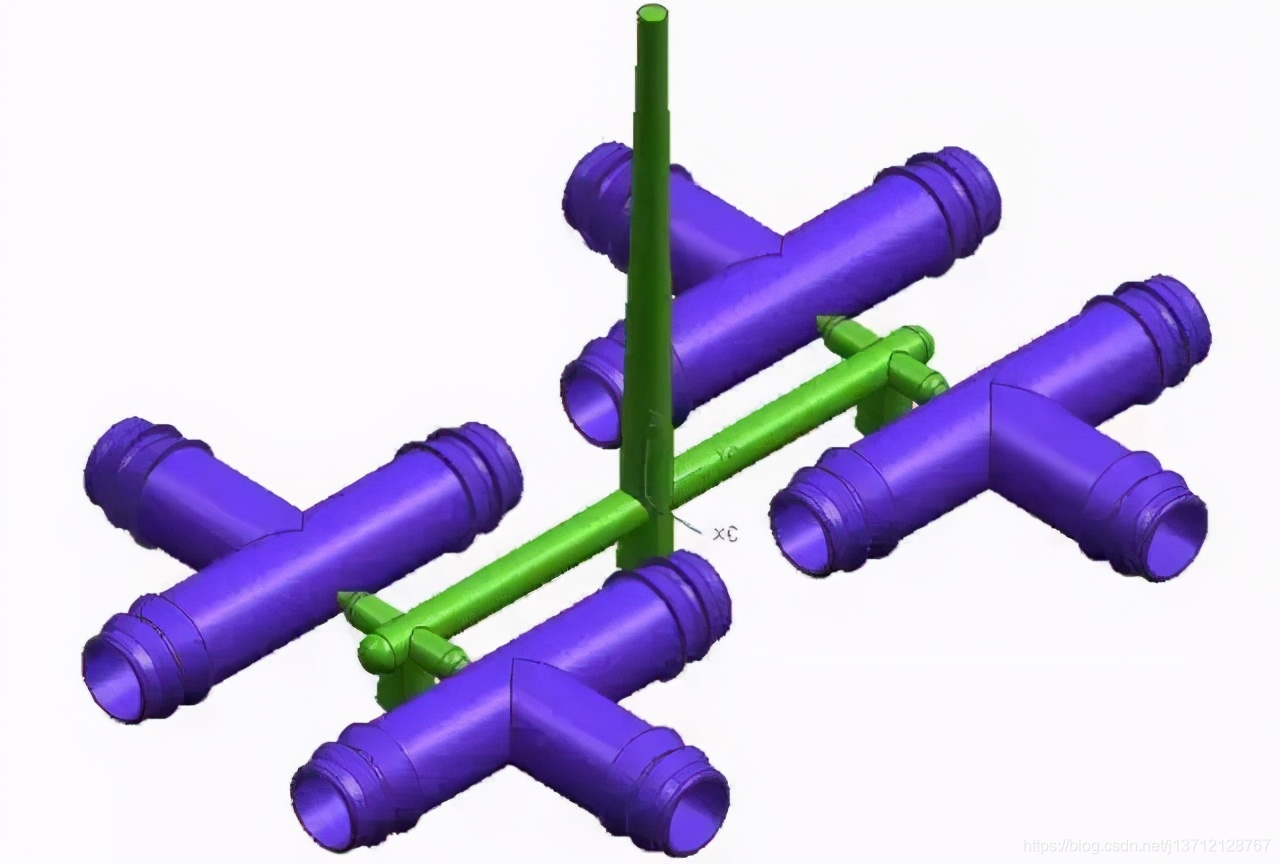
· The Core Detail: The gate is the "valve" controlling the melt's entry into the cavity. Its location, type, and size are the soul of the design.
· Criticality of Location: The gate should be placed at a thick section of the part to ensure smooth filling. Crucially, it must avoid directing flow directly onto cores or small inserts, as the high-speed plastic could impact and damage them. Most importantly, the gate location directly determines the position of weld lines and venting. A poor gate location can place weld lines on cosmetic surfaces or high-stress areas, causing both quality and functional defects.
· Choosing the Type:
· Edge Gate: Most common, but leaves a noticeable gate mark.
· Submarine (Tunnel) Gate: Can be automatically sheared, used for internal features, enabling automation.
· Pinpoint Gate: Leaves a small mark, often used in multi-cavity molds, preferred for cosmetic parts.
· Fan Gate/Film Gate: Used for large, flat parts, effectively reducing orientation and internal stress.
· The Runner: The Melt's "Distribution Network"
· The Core Detail: The goal of runner design is to fill all cavities simultaneously, at equal temperature and pressure.
· Cold Runner vs. Hot Runner:
· Cold Runner: Requires ejection, generates scrap. Requires balanced layout, achieved by adjusting the diameter and length of runner branches.
· Hot Runner: No scrap, energy-saving, allows better control over packing pressure. However, it is extremely sensitive to temperature control; even minor variations can cause color differences or uneven filling.
Detail Two: The Cooling System – The "Master" of Cycle TimeDid you know? In a typical injection molding cycle, cooling time accounts for about 70%. The efficiency of the cooling system directly dictates your production efficiency.
· Uniformity is King:
· The Core Detail: The mold is essentially a heat exchanger. The goal of cooling is not just to "cool quickly," but to "cool uniformly."
· Consequence: Non-uniform cooling causes uneven internal shrinkage of the part, which is the primary cause of warpage and deformation. Areas near coolant channels cool and solidify first, while areas farther away cool later. This asynchronous shrinkage acts like an invisible hand, "twisting" the part out of shape.
· Cooling Channel Design Principles:
· "Conformal Cooling": Ideally, coolant channels should follow the part contour as closely as possible, maintaining a consistent distance from the cavity surface.
· Pitch and Diameter: The spacing between channels should not exceed 3-5 times the channel diameter to ensure heat transfer efficiency.
· Handling "Hot Spots": For areas of the mold that are particularly thick and concentrate heat (e.g., core pins), conventional channels are insufficient. Special methods must be used, such as highly conductive beryllium copper alloys, heat pipes, or turbulent baffles, to accelerate heat dissipation.
Detail Three: The Venting System – The Mold's "Breathing Apparatus"Molds are not completely airtight. When melt is injected at high speed, the air inside the cavity must be rapidly expelled; otherwise, it becomes compressed, heats up, and becomes a "killer" of the part.
· Consequences of Trapped Air:
· Burning (Diesel Effect): Air compressed rapidly can instantly heat up to hundreds of degrees Celsius, burning the plastic and causing black charring.
· Short Shot: Air occupying space prevents the melt from completely filling the cavity.
· Surface Defects: Dull, unfilled surfaces in areas of trapped air.
· Effective Venting:
· Location: Venting slots should be placed at the end of melt flow and in areas prone to trapped air (e.g., where two inserts meet, ejector pin gaps).
· Dimensions: The depth of venting slots is a matter of micrometer-level precision! Typically 0.01–0.03mm (about 1/5 the diameter of a human hair). Too deep causes flash; too shallow impedes venting. The width should be as wide as possible.
· Multiple Methods: Besides vents on the parting line, the fit clearance of ejector pins and inserts (typically 0.02–0.04mm per side) can also be used for venting.
Detail Four: The Ejection System – The Final "Push"Even a perfectly formed part is useless if it gets damaged during the final step of ejection.
· Draft Angle:
· The Core Detail: This is a fundamental requirement for product designers. Without sufficient draft angle, the part will either be difficult to eject (sticking, tearing) or generate significant frictional heat during ejection, scuffing the surface.
· Rule of Thumb: Cosmetic surfaces typically need 1° or more of draft; internal features may require 2° or even more. Textured surfaces (e.g., grain) require additional draft based on texture depth (add ~1° per 0.025mm of texture depth).
· Ejection System Design:
· Balance: Ejector pins must be laid out balanced to ensure the part is ejected smoothly and simultaneously. Any unbalanced force can cause whitening (stress marks) or deformation.
· Surface Area: The points where ejector pins contact the part must have sufficient strength and surface area to prevent piercing or ejection marks. For deep, thin-walled parts, air ejectors or sleeve ejectors are better choices.
Conclusion: Details have a dual nature: the source of perfection and the seed of catastrophe.Mold design is an art of balance, a dance of precise calculation and experiential intuition played out in steel. Before investing hundreds of thousands, or even millions, in mold manufacturing, it is crucial to devote ample thought to the design stage.
Translating these design principles into stable, efficient physical molds is the expertise of professional mold manufacturers like
JBRplas. Understanding that mold details determine success, JBRplas leverages deep experience and advanced technology to ensure that every delivered mold features optimal gating, cooling, venting, and ejection systems, helping clients achieve high-quality, high-efficiency production goals. If you are facing injection molding challenges, JBRplas offers professional solutions to ensure your product's success.