Look around. The modern world is intricately shaped by plastic. From the ergonomic contours of your smartphone case to the bristles of your toothbrush, the keys beneath your fingertips, and countless components within the devices you rely on daily – these ubiquitous items share a common genesis. They are typically not individually crafted, but produced en masse with astonishing precision and consistency. This raises a fundamental question: How are these complex, high-volume plastic parts manufactured? The answer lies in a transformative process that underpins modern manufacturing: Injection Molding. This article will guide you through the fascinating journey undertaken by humble plastic pellets to emerge as the functional and aesthetic products that define our lives.
Part 1: The Journey's Origin - "Magic Powder" and the "Furnace"
Every transformation requires raw material. In injection molding, this begins with plastic pellets – small, often colorful granules resembling grains of sand or rice. These are far from inert; they are the foundational "magic powder," the essential raw ingredient. Different types of plastic pellets, such as ABS (Acrylonitrile Butadiene Styrene) for toughness or PP (Polypropylene) for flexibility and chemical resistance, are selected based on the final product's required properties. These pellets are fed into the heart of the operation: the injection molding machine.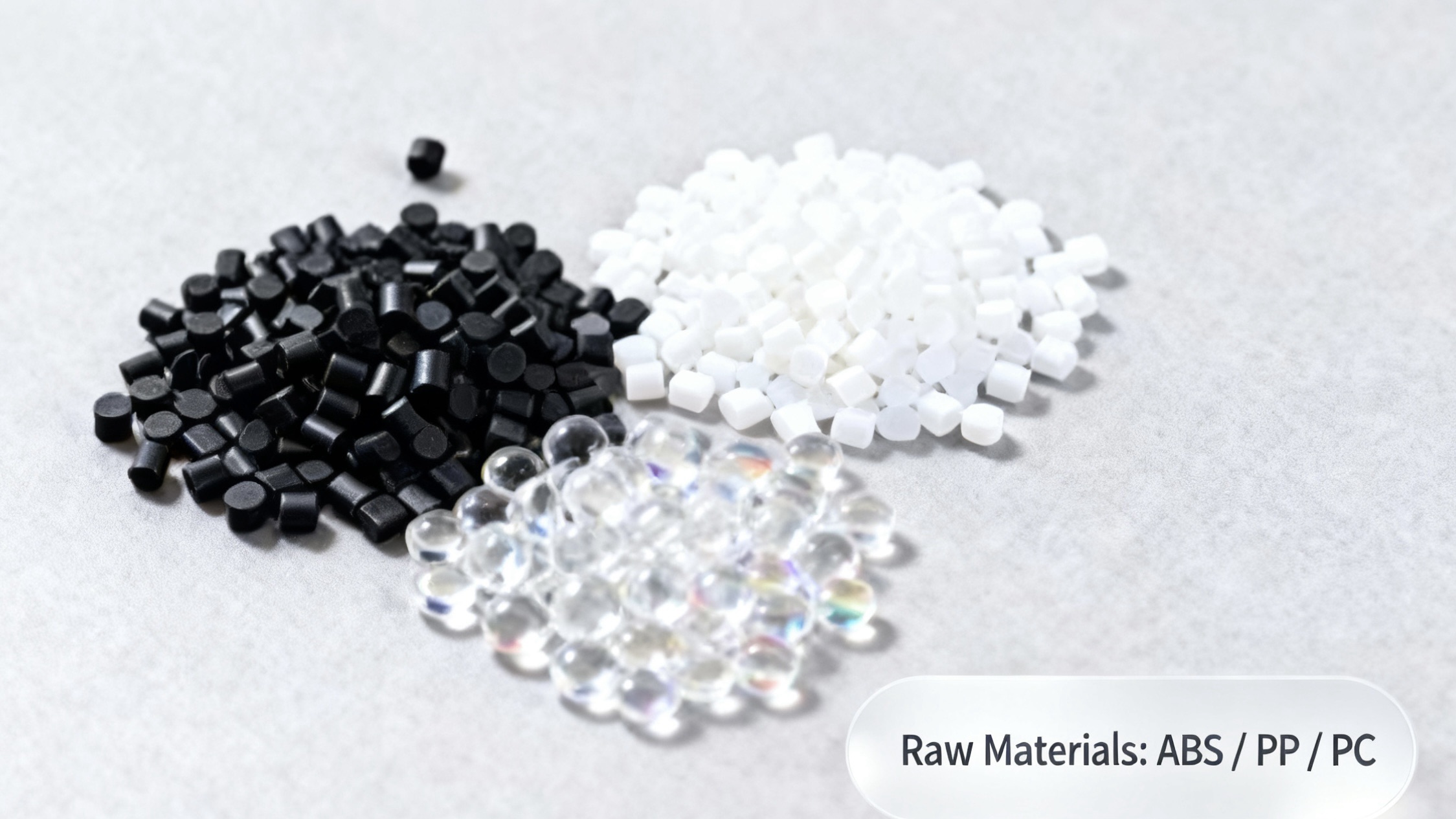
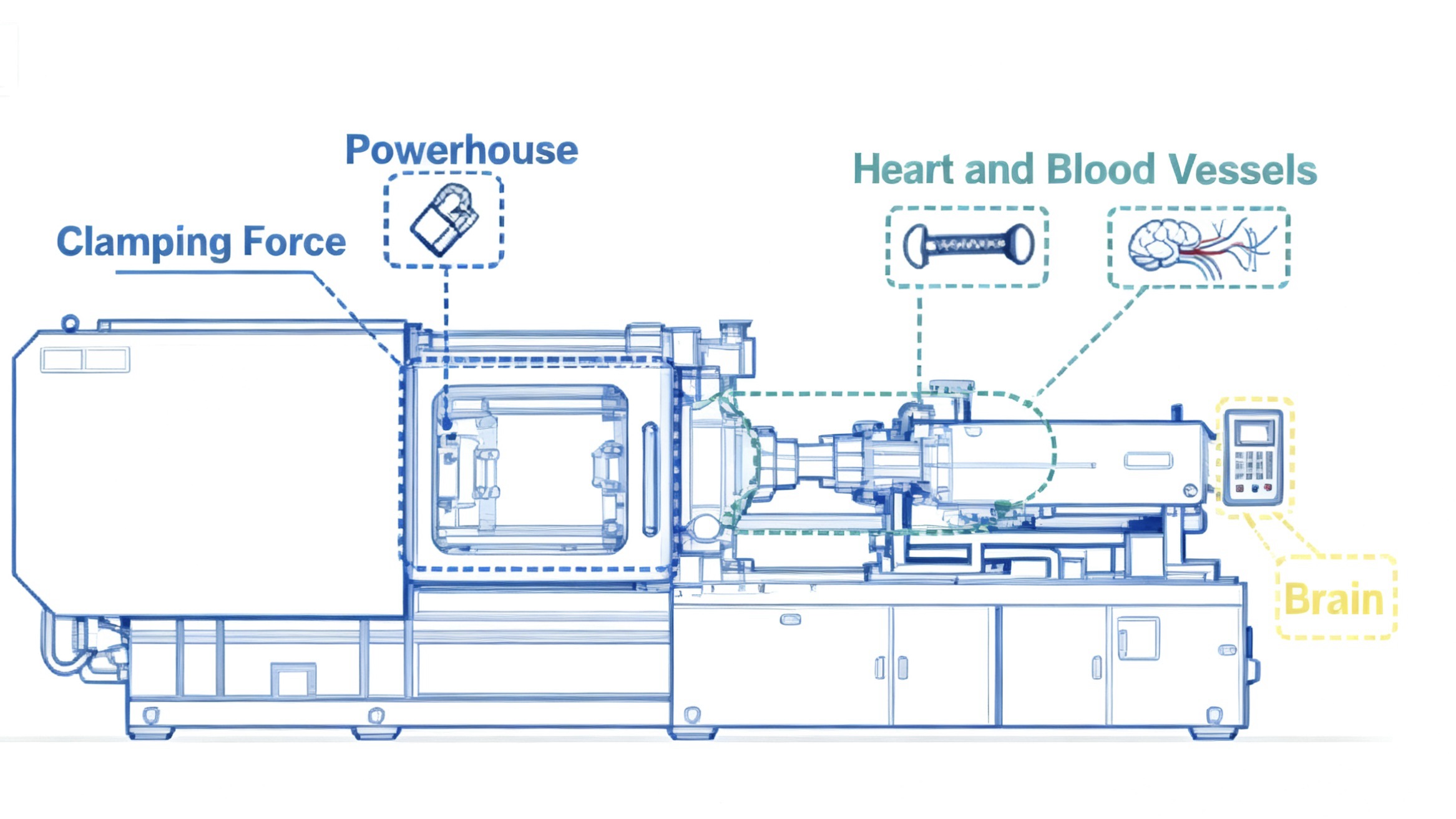
This machine is the industrial "furnace" where the transformation truly begins. It comprises three fundamental systems working in concert:
- The Clamping System: The "Powerhouse" - This robust assembly provides the immense force necessary to securely close and hold the two halves of the mold together under extreme pressure during injection. Think of it as the muscle that prevents the molten plastic from escaping the mold cavity.
- The Injection System: The "Heart and Arteries" - This is where the pellets encounter heat and motion. A reciprocating screw rotates within a heated barrel. As the pellets are conveyed forward by the screw, they are subjected to controlled heat, melting into a viscous, homogeneous liquid. This molten plastic is then injected under high pressure through a nozzle into the awaiting mold cavity. The screw acts as both mixer and piston.
- The Control System: The "Brain" - Overseeing the entire intricate ballet is a sophisticated computer control system. It meticulously monitors and regulates critical parameters: barrel temperature zones, injection speed and pressure, holding pressure, cooling time, and clamp force. This algorithmic precision ensures repeatability and quality part after part.
Part 2: The Core of the Journey - The Four-Step cycle, typically lasting seconds to minutes
- Clamping and Injection: The mold halves, precision-machined to define the part's shape, are hydraulically or electrically clamped shut with tremendous force. Simultaneously, the injection system's screw moves forward like a plunger, forcing the molten plastic through the sprue, runners, and gates, and into the mold cavity at high speed. The cavity is completely filled under controlled pressure.
- Packing and Cooling: Once the cavity is filled, the screw often maintains a holding pressure ("packing pressure"). This compensates for the natural shrinkage of the plastic as it begins to cool mold, ensuring dimensional accuracy and preventing sink marks. Concurrently, the mold's internal cooling system, a network of channels circulating temperature-controlled water, actively extracts heat from the molten plastic, causing it to solidify into the desired shape. Cooling typically consumes the largest portion of the cycle time.
- Mold Opening and Ejection: After sufficient cooling time, the clamping system releases its force, and the moving half of the mold retracts, opening the mold. An ejection system, often consisting of pins, blades, or plates driven by an ejector plate, then activates. This mechanism gently but firmly pushes the now solid plastic part out of the mold cavity and onto a conveyor belt, chute, or robotic pickup area.
Part 3: Journey's End and New Beginnings - Post-Processing and the Cycle Continues
- Part Handling and Finishing: The ejected part often carries excess material – the sprue (the main channel from the injection nozzle) and runners (channels distributing plastic to cavities), along with small gates (the entry points into the cavity). These are typically separated from the primary part automatically (e.g., by robots) or manually. Minor finishing operations like degating (removing the gate vestige), deflashing (removing thin excess material on edges), or surface treatments might follow.
- Quality Assurance: Especially for initial production runs or critical parts, rigorous quality checks are performed. Dimensions are verified against CAD models using tools like calipers or Coordinate Measuring Machines (CMMs). Visual inspections check for surface defects, color consistency, and overall aesthetic appeal. Functional testing might also be conducted.
- Cycle Restart: The beauty of injection molding lies in its cyclical nature. Almost immediately after ejection, the mold closes again, the screw retracts and rotates to gather and melt the next shot of pellets, and the entire process repeats. This high-speed, automated cycle enables the mass production of identical parts with remarkable efficiency.
Conclusion
In pellets into complex, high-precision components with unparalleled efficiency and repeatability. This process, blending immense mechanical power with sophisticated control systems and precision tooling, drives innovation across industries – from consumer electronics and automotive to medical devices and packaging. Its ability to produce intricate geometries, diverse materials, and vast quantities makes it indispensable. The next time you hold a precisely molded plastic object, take a moment to appreciate the remarkable journey it undertook – a journey from raw pellet to finished product, powered by the "magic" of injection molding.