As manufacturing enters its smart era, the injection molding industry is undergoing a seismic transformation. Driven by Industry 4.0 imperatives and global sustainability mandates, traditional processes are evolving into data-centric, eco-conscious systems. For forward-thinking manufacturers, understanding these shifts isn’t optional—it’s strategic.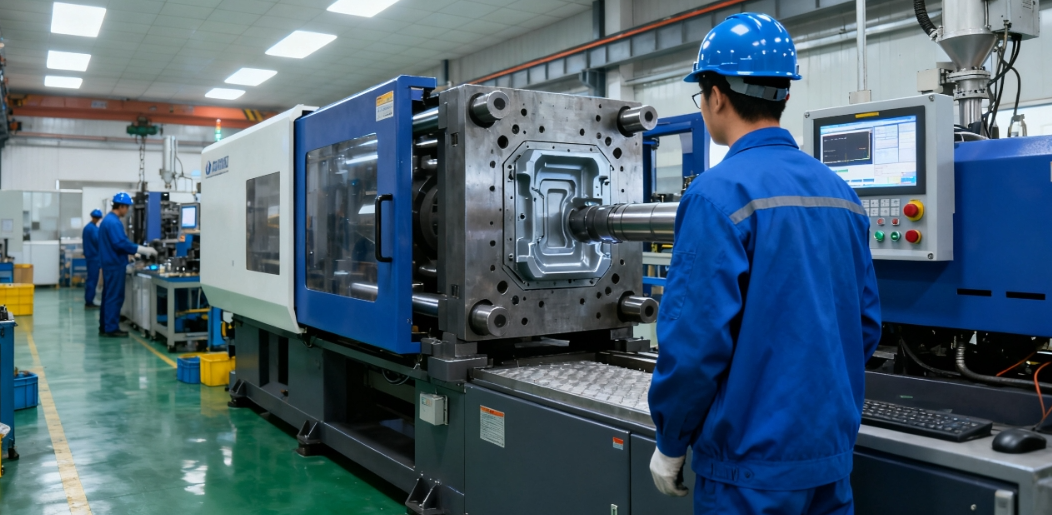
1. Smart Molding: The Data Transitioned from Buzzwords to Operational Necessities.
Modern injection molding machines embedded with sensors collect real-time data on parameters like pressure, temperature, and cycle times. AI algorithms analyze this data to:
- Predict defects before they occur, reducing scrap rates by up to 30%.
- Enable predictive maintenance, slashing unplanned downtime by 50% through component failure forecasts.
- Self-optimize production via closed-loop systems that adjust variables like cooling time dynamically.
Example: Automotive suppliers now use AI-powered mold flow simulation to preempt warpage in complex geometries.
2. Sustainability: Beyond Compliance to Competitive Edge
Regulatory pressures (e.g., EU Plastic Tax) and ESG demands are reshaping material and energy strategies:
- Circular Materials: Bio-based polymers (e.g., PLA from sugarcane) and Post-Consumer Recycled (PCR) resins now comprise% of new projects.
- Energy Efficiency: All-electric machines dominate 65% of new installations, cutting energy use by 60% versus hydraulic counterparts.
- Carbon Accounting: Integrated software tracks emissions per unit, aligning with Scope 3 reporting requirements.
3. Micro-Molding: Precision at Microscopic Scales
The surge in miniaturized electronics (wearables, IoT sensors) and medical devices (implantable components) demands unprecedented precision:
- Tolerance thresholds tightened to ±5 microns.
- Cleanroom environments (ISO Class 7) preventing particulate contamination.ano-scale tooling with conformal cooling A med 90% using micro-molding with real-time optical inspection.
4. Advanced Polymers: Enabling Next-Gen Applications
High-performance thermoplastics are unlocking breakthroughs:
- 5G Infrastructure: LCP (Liquid Crystal Polymer) shields high-frequency signals with minimal dielectric loss.
- Aerospace & EV: PEEK (Polyether Ether Kets 250°C while halving component weight.
- Self-Reinforcing Composites: Materials like PAEK (Polyaryletherketone) integrate carbon fibers for load-bearing structural parts.
The Future Factory: A Convergenceciplines
Tomorrow’s molding facilities will merge robotics already piloting "dark factories" report 40% higher OEE (Overall Equipment Effectiveness) through fully automated, lights-out production. As McKinsey notes, "Injection molding is no longer a commodity process—it’s a value multiplier for high-margin industries."
Final Insight: The transformation positions injection molding as the nucleus of advanced manufacturing—where sustainability, intelligence, and precision intersect to redefine what’s possible.