If you are in hardware, you alredy know: the mold is the mother of your product.
Yet during development, many startups and buyers fixate on one thing-- the price tag. The result? Molds arrive late, tolerances are off, or worse, they simply aren't built for mass production.
Today, let's skip the corporate fluff. Drawing on insights from JBRplas, I'll break down how to choose the right mold based on one critical factor: structural classification.
The Classical Mistake: Assuming All Molds Are Created Equal
Most inquiries start with:"I need an injection mold."
But even within injection molding, there's a steep learning curve.
Based on JBRplas' technical docs, molds fall into three main structural categories:
1.Two-Plate Molds: Simple structure. Ideal for appliance housings and commodity parts. The catch? Most require secondary operations to trim the gate(where the plastic enters).
2.Three-Plate Molds: Use a pinpoint gate. They leave minimal vestige on the part, enabling a near-seamless finish. Perfect for electronics with high cosmetic requirements. The trade-off? Higher complexity and material consumption.
3.Hot Runner Molds: The premium choice. Heaters keep the plastic molten inside the channels(runners), eliminating waste and shortening cycle times. Best for high-volume production.
Pro Tip:
If you are making
consumer electronics(think router casings or smart speakers), don't cheap out with a two-plate mold just to save a few thousands dollars. A three-plate or hot runner system pays for itself through superior aeshetics and zero scrap.
Don't Fall for "Full-Service"-- Verify the Machine Tonnage
Everyone claims to offer "end-to-end service." Look at the specs instead.
Take JBRplas: they operate a fleet of machines ranging from
100T to 470T.
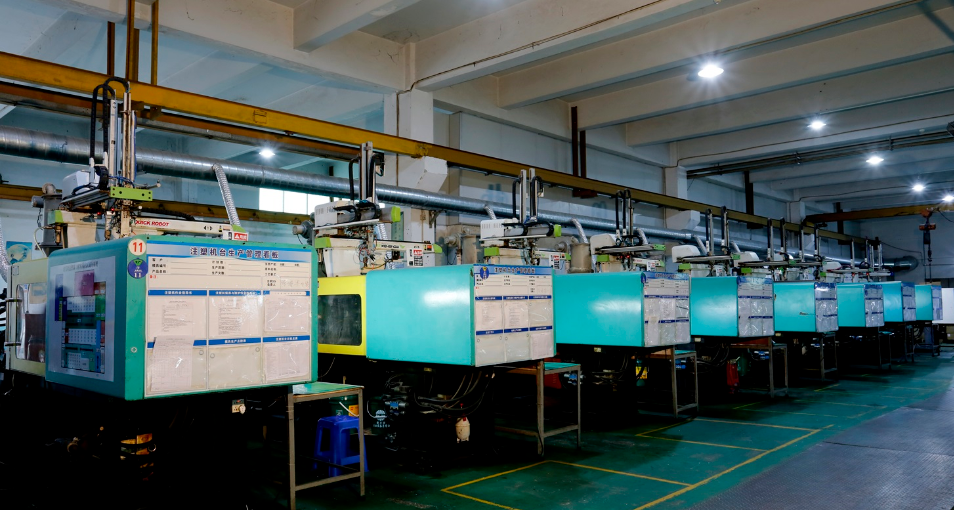
Why does this matter?
100T--168T: Precision territory. Perfect for micro-gears,connectors, and brackets.
320T--470T:Heavy-duty zone. Necessary for bumpers, monitor backs, and large-format molds(up to 15 tons).
If your product lineup includes both tiny internals and large housings, a factory without diverse tonnage will have to outsource. That's where supply chains break and quality drifts, Always check the Machine List before the paint job.
The Hidden Differentiator: Cleanroom Finishing
A great mold is just the beginning.
Post-molding processes like painting and silkscreen printing are where many factories stumble.
Here's the key:
Cleanroom Spray Painting.
Standard workshops are prone to dust and orange peel texture. A certified cleanroom environment ensures that your glossy "Piano Black" panels don't end up looking like they have acne. If you care about surface finish, this isn't optional--it's essential.
The Bottom Line
When choosing a molding partner, run through this three-point checklist:
1.Structure: Match the mold type (Two-Plate vs. Three-Plate/Hot Runner) to your cosmetic needs.
2.Tonnage: Ensure their press range covers your part size to avoid outsourcing risks.
3.Finishing: Confirm they have in-house, dust-free painting and assembly capabilities.
In this industry, cutting corners rarely saves money--it usually just costs your reputation.