If high-speed
injection is the "assault" that fills the mold cavity with plastic melt, then the packing phase is the critical stroke that determines the final density, dimensions, and appearance of the product. This seemingly simple yet profoundly complex stage is the key differentiator between ordinary and precision injection molding.
Today, we will take an in-depth look at packing pressure—a core parameter that holds "absolute veto power" over product quality.
Many people simplistically understand packing as "compensating for material," which is correct but far from comprehensive. The physical processes during the packing phase are much more intricate.
After the molten plastic fills the cavity under high speed and pressure, it begins to cool rapidly upon contact with the cold mold walls. Cooling inevitably leads to shrinkage, a fundamental physical property of plastics. Without a sustained pressure pushing from behind, this shrinkage would cause sink marks in thicker sections, voids or vacuum bubbles inside the product, and lead to dimensional instability.
Therefore, the core mission of packing is: Before the gate solidifies, continuously supplement the mold cavity with melt to compensate for the volume reduction caused by cooling shrinkage, ensuring the product is dense, dimensionally accurate, and has a smooth surface.
Packing is not a single, fixed action but a precisely programmable "curve." Excellent process engineers compose perfect products by orchestrating this "symphony."
Setting Basis: Packing pressure is typically set to 40% ~ 80% of the injection pressure.
Setting Too High: While making the product denser, it can lead to:
- Flash: Excessive pressure can force the mold slightly open, creating flash.
- Internal Stresses: Molecular chains are over-compressed, increasing product brittleness and susceptibility to warpage or even stress cracking.
- Sticking: The product can over-pack the mold, making ejection difficult.
Setting Too Low: Fails to effectively overcome cooling resistance and compensate for shrinkage, directly leading to sink marks and undersized dimensions.
This is another critical parameter determining the success of the packing phase. It refers to the duration for which the screw maintains forward movement under packing pressure.
Golden Rule: Packing time must continue at least until the primary gate solidifies.
How to Determine? A classic method is: during stable production, gradually increase the packing time. If the product weight stops increasing, it indicates the gate has sealed. This point represents the minimum necessary packing time. Extending the packing time beyond this is wasteful and can unnecessarily lengthen the cycle time.
Insufficient Time: If the screw retracts before the gate solidifies, unsolidified melt in the cavity can flow back into the runner, resulting in insufficient product density and severe shrinkage.
For complex products (e.g., with significant wall thickness variations), a single packing pressure is often inadequate. This is where multi-stage packing technology becomes essential.
Application item: An automotive interior part, featuring numerous deep ribs in the middle.
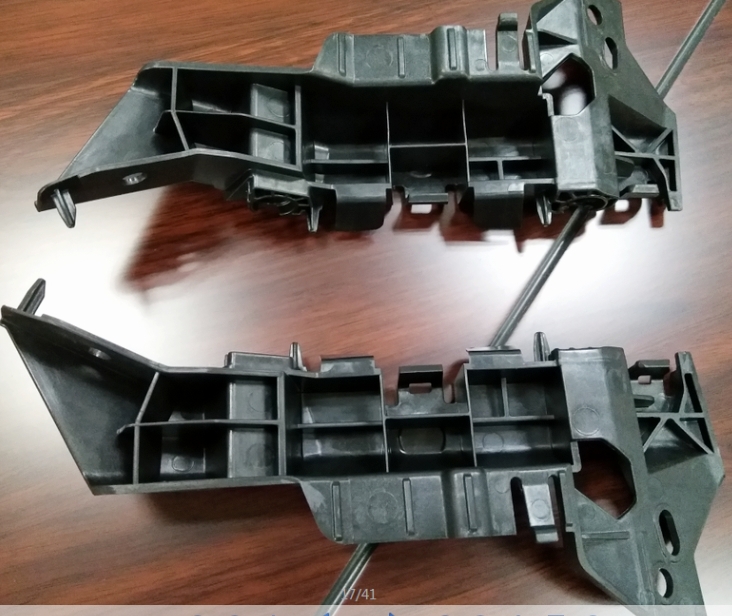
Strategy:
- Stage 1 (High Pressure, Short Time): Apply intense packing specifically to the thick areas to prevent sink marks.
- Stage 2 (Medium Pressure, Longer Time): Switch to a lower pressure to provide uniform packing for the entire product, preventing internal stresses in thin-walled areas.
- Stage 3 (Low Pressure, Short Time): Just before the gate fully solidifies, use a very low pressure for a "finishing touch," further relieving stresses.
Through multi-stage packing, "precision treatment" for different zones of the product can be achieved, optimizing quality.
Improper packing settings can lead to almost all internal quality issues and many appearance defects:
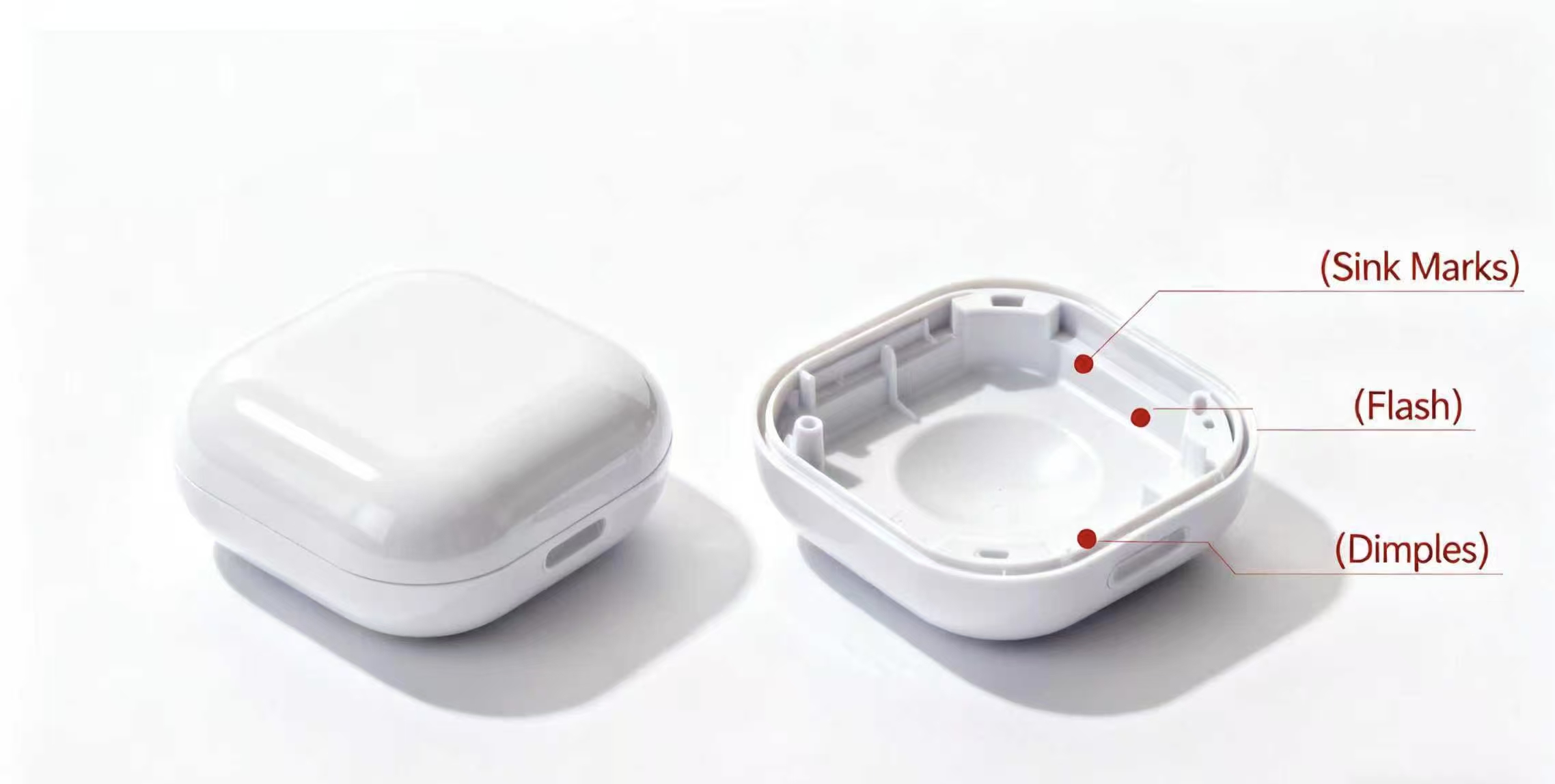
- Appearance Issues: Sink marks, dimples, uneven gloss.
- Dimensional Issues: Significant dimensional variation, warpage, out-of-spec flatness.
- Performance Issues: Insufficient product strength, poor impact resistance, internal voids, or weak weld lines.
Traditional packing setup relies heavily on engineer experience and "trial and error." Today, with the popularization of Scientific Molding principles, we can optimize using more scientific methods:
- Plot the V-P Switchover Curve: Analyze the injection pressure profile to find the smoothest switchover point from injection to packing.
- Conduct DOE (Design of Experiments): Systematically vary combinations of packing pressure and time, measuring their impact on product weight, dimensions, and critical features to find a robust process window.
- Utilize Mold Flow Analysis (CAE): Simulate the packing process using CAE software before cutting the mold to predict sink mark locations and warpage trends, providing theoretical guidance for actual setup.
Packing pressure, this "microcosm" hidden within the injection cycle, perfectly illustrates the industrial philosophy that "details determine success or failure." It is not an isolated parameter but is intricately linked to temperature, speed, material properties, and mold design. Mastering it precisely requires profound theoretical knowledge and extensive practical experience.
On the path to pursuing
ultimate
dimensional stability and intrinsic quality, in addition to precise process control, selecting raw materials with stable performance and predictable shrinkage rates is equally crucial. This is where the value of high-end compound plastic suppliers like
JBRplas comes into play. The materials they provide not only offer high batch-to-batch consistency but also come with accurate PVT data, which is fundamental for scientific packing setup. Whether facing stringent tolerance requirements or solving complex warpage issues, JBR's professional material solutions and in-depth technical support can provide foundational assurance, making your packing process debugging twice as effective.