In the fields of mold manufacturing and injection molding, "VDI texture" is a frequently mentioned technical term. It originates from the VDI 3400 standard established by the Association of German Engineers, and is primarily used to specify and define the roughness levels of mold surfaces, directly impacting the visual appearance and functionality of plastic parts.
VDI Texture Grade Classification
VDI textures are typically indicated by numbers, covering a wide range from fine to rough. While many people are familiar with medium to high roughness grades like VDI 24 to VDI 45, the VDI system actually starts from the finest grade, VDI 0.
VDI 0 to VDI 10 fall within the ultra-fine finishing category, primarily corresponding to polished mold surfaces:
-
VDI 0 corresponds to an extremely high mirror polish with very low surface roughness, commonly used for high-transparency products like optical lenses.
-
VDI 3 to VDI 6 correspond to fine polished surfaces, suitable for transparent parts or high-gloss appearance components.
-
VDI 9 to VDI 10 begin to show a slight matte tendency, typically achieved through lapping with fine oil stones or fine sandpaper.
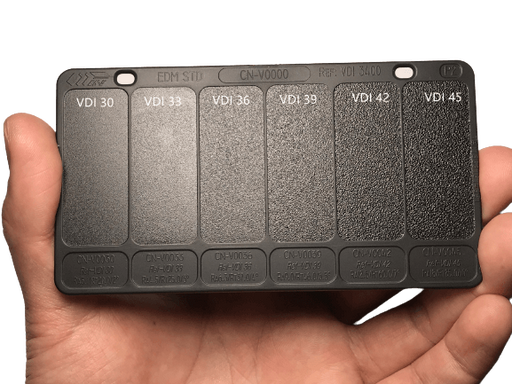
As the VDI number increases, the surface becomes progressively rougher. VDI 12 to VDI 18 are common fine textures, suitable for electronic product housings. VDI 21 to VDI 33 are the most widely used matte, non-reflective textures, effective for resisting fingerprints and reducing glare. VDI 36 and above fall into the coarse texture category, often used for tool handles or areas requiring strong slip resistance.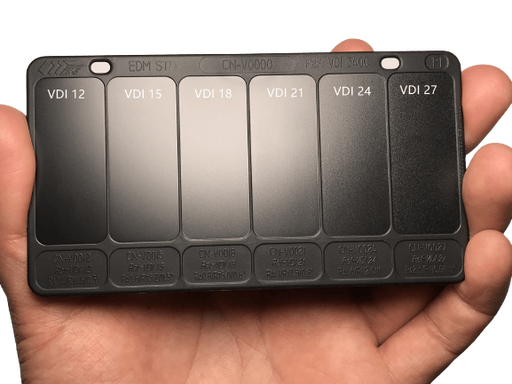
Key Design Consideration: Draft Angle
When designing products with VDI texture, the draft angle is a crucial factor that must be considered. The rougher the texture, the larger the required draft angle. For example, VDI 18 typically requires a draft angle of approximately 2.5 degrees. For VDI 33, the draft angle might need to be increased to 5 degrees or more; otherwise, the product surface may be scratched or damaged during ejection from the mold.
Modern Processing Trends
Traditionally, VDI textures were primarily achieved through Electrical Discharge Machining (EDM) or chemical etching. However, in recent years, laser texturing technology is transforming this field. Compared to traditional methods, laser processing offers higher precision, is more environmentally friendly, and can produce textures with different gloss levels while maintaining the same roughness, providing designers with greater creative freedom.
In summary, from the mirror-like finish of VDI 0 to the coarse surface of VDI 45, the VDI standard provides a comprehensive technical language for mold surface finishing, helping designers and engineers communicate accurately and collaborate efficiently.