Injection molding is a fundamental process in the production of plastic parts. In this process, plastic is heated and softened in the injection molding machine's barrel, then filled into a mold where it waits to be shaped or solidified. After the solidification process starts, the molded part is ejected or removed from the mold cavity. Injection molds are not just shaping tools; they also function as heat converters and ejection devices, and they may need to separate the runner system from the molded part.
The main objectives of mold design and manufacturing are to produce the required number of parts at a specific rate. When only a small number of parts are needed, injection molds can be made from inexpensive materials using cost-effective methods. These prototype molds can be made from other plastics or dental plaster. However, for mass production, the complexity and manufacturing costs of molds increase significantly.
Although the cost of mold manufacturing is directly related to the materials used, the size and design complexity of the parts have a more significant impact on the overall cost. Some molds can be more valuable than the injection molding machine itself. Therefore, careful attention must be paid to avoid errors in the design of parts and molds.

Parts must be designed to suit the injection molding process. The mold design must meet production speed and quality requirements while minimizing maintenance and the need for supervision. To consistently produce high-quality molded parts, the mold design must be perfected.
Efficient mold design contributes to higher production rates and better-quality parts. The mold should be designed to allow for rapid cooling and easy ejection of the part to maximize production efficiency.

Plastic material is heated in the injection molding machine’s barrel until it softens. The softened plastic is then injected into the mold cavity.
The molten plastic fills the mold cavity, and solidification begins. The design of the mold ensures that the part retains its shape as it cools and solidifies.
Once the part has solidified, it is ejected from the mold. The mold must be designed to facilitate easy ejection without damaging the part.
The materials used for mold making, such as steel or aluminum, significantly influence the cost. High-quality materials are essential for molds used in mass production to ensure durability and longevity.
Larger and more complex parts require more intricate mold designs, increasing manufacturing costs. Detailed designs necessitate precision machining and additional features like cooling channels and ejection systems.
For small production runs, inexpensive materials and simpler designs can be used. However, for high-volume production, investing in durable and efficient molds is crucial to maintain production speed and quality.

Using prototype molds made from cheaper materials can help in the initial stages of product development. These molds allow for testing and modifications before committing to more expensive production molds.
Modular molds, which consist of interchangeable components, can be used to produce different parts without the need for multiple complete molds. This approach reduces overall tooling costs and increases flexibility in production.
Optimizing the design of both the part and the mold can lead to significant cost savings. Simplifying part geometry, reducing the number of undercuts, and using standard mold components can all contribute to lower costs.
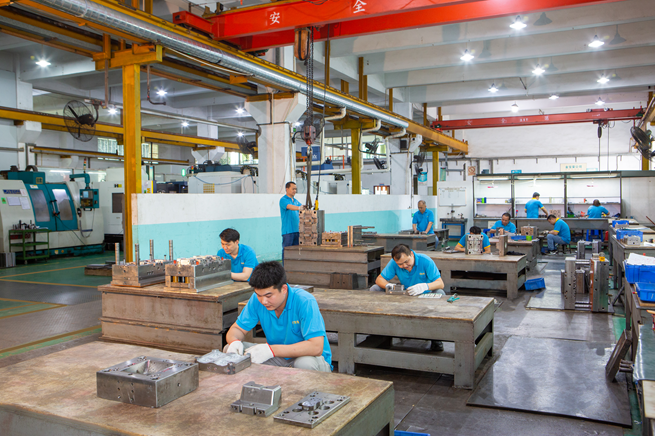
Injection molding is a versatile and efficient process for producing plastic parts. The success of this process hinges on the careful design and manufacturing of molds, considering factors like material costs, part complexity, and production volume. By optimizing these elements, manufacturers can achieve high-quality parts with minimal errors and maintenance, ensuring a cost-effective and efficient production process.
FAQs
What is the primary objective of mold design and manufacturing?
How does part size and complexity affect mold cost?
What are prototype molds used for?
How can design optimization reduce mold costs?
Why is it important to consider production volume in mold design?
What is the role of modular molds in cost reduction?