The manufacturing world is experiencing a wave of transformation with the integration of smart injection molding technologies. As industry leaders push for greater efficiency, quality, and precision, innovations like real-time monitoring, automation, and AI-driven optimization are becoming the gold standard in production facilities. These advancements provide new opportunities for companies specializing in plastic injection molding, especially those with established expertise in mold design, injection molding, and surface finishing.
Located in Shenzhen’s Bao’an District, JBR is a notable player in the injection molding industry. Known for producing high-quality plastic components like smartphone charger shells, JBR stands as an example of how traditional craftsmanship can align with cutting-edge technology to elevate manufacturing practices.
At the heart of smart injection molding are intelligent systems that monitor and optimize the production process in real time. These technologies use sensors to collect data on variables such as mold temperature, injection pressure, and material flow. With AI and data analysis, the system can make instant adjustments, ensuring consistency and reducing the likelihood of defects like warping or incomplete fills.
Injection Molding Workshop
The application of such technologies has profound implications for companies producing high-precision parts. For instance, processes akin to those at JBR, where maintaining uniform material flow and precise pressure levels is critical, could benefit immensely from real-time optimizations. The ability to instantly correct temperature fluctuations or adjust pressure parameters would improve product quality and reduce material waste.
One of the most important aspects of efficient injection molding is the design and tooling of the molds. Using advanced simulation software, manufacturers can model how molten plastic will flow through a mold, identifying potential issues before actual production begins. This minimizes errors, reduces trial-and-error, and leads to faster development cycles.
injection molding machine
Companies like JBR have long been leaders in mold design. By employing multi-cavity molds and optimizing cooling channels, they ensure that even the thinnest-walled components, like smartphone charger shells, are produced with precision and efficiency. When integrated with smart factory technologies, mold simulation tools could allow JBR to further refine their designs, ensuring optimal plastic flow and minimizing the risk of defects, even in highly complex molds.
Traditional injection molding requires careful monitoring of conditions such as material temperature, injection speed, and cooling times. In a smart factory setting, these parameters are continuously adjusted by automated systems. For example, if the system detects a slight variation in viscosity or pressure, it will instantly correct the discrepancy to maintain ideal molding conditions.
For manufacturers producing intricate and high-demand items, such as smartphone charger shells, this type of automation is invaluable. While JBR already excels in producing defect-free components through precise temperature and pressure control, the adoption of real-time monitoring could further streamline their operations and enhance product consistency.
Another area where smart factory technologies excel is in automated surface finishing. Robotic arms equipped with spray coating capabilities can apply uniform coatings to each part, reducing human error and ensuring consistent quality. This is particularly beneficial for components that require flawless finishes.
High-quality surface finishes are critical for many consumer products, and JBR has developed robust spray coating techniques to ensure that each part meets rigorous standards. By integrating automation into these processes, companies can achieve even greater efficiency, coating precision, and quality control.
The future of injection molding lies in the seamless integration of traditional manufacturing expertise with smart technologies. While companies like JBR have not formally partnered with smart factory pioneers, the benefits of combining their established processes with advanced technology are evident. As the industry evolves, the adoption of real-time monitoring, AI-driven optimization, and automated finishing will enable manufacturers to deliver superior products more efficiently and sustainably.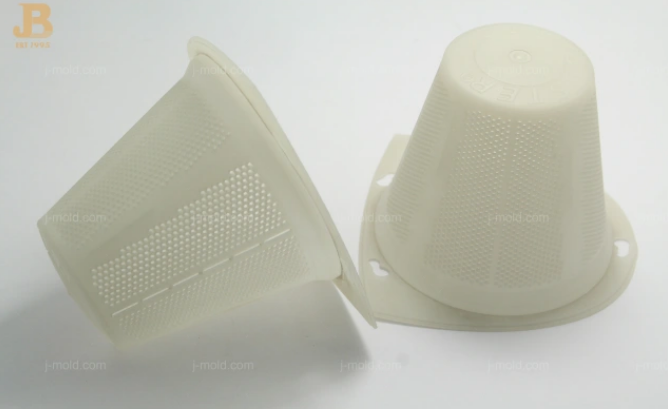
Plastic Injection Molding Funnel produced by JBR
By embracing these advancements, companies can remain at the forefront of the injection molding industry, meeting growing consumer demands with unparalleled precision and quality.