Determining the mold opening direction is the starting point of mold design, which directly affects the product's appearance, structure, mold complexity, production cost, and subsequent injection molding process.
Selecting the mold opening direction requires comprehensive consideration of the following core principles and steps. You can think of it as a process of "trade-offs."
I. Core Principles (In Order of Priority)
1. Ensure Successful Product Ejection (The Primary Rigid Principle)
Avoid Undercuts: The mold opening direction must allow the product to be cleanly ejected from the cavity; there must be no "undercut" structures. This is the most fundamental requirement. If unavoidable undercuts exist, they must be resolved with side actions like sliders, lifters, etc., which increases mold cost and complexity. A good mold opening direction should minimize or simplify these actions.
2. Protect Key Appearance and Functional Surfaces
Appearance Surfaces (Class-A Surfaces): e.g., the front face of a phone case, appliance panels, should ideally be placed on the fixed half (cavity side). The fixed half typically offers more stable surface quality and is less prone to parting line flashes. It's best to form the entire appearance surface on a single, complete mold insert to avoid parting lines crossing it.
Functional Surfaces: e.g., gear teeth, optical lens surfaces, sealing surfaces requiring high dimensional accuracy and surface finish should also be prioritized for integrity.
3. Facilitate Venting
Air must be efficiently expelled as molten plastic fills the cavity. Typically, deeper sections of the part (e.g., side with many ribs or bosses) should be placed on the moving half (ejection side) to utilize venting through ejector pin and insert gaps. Avoid creating trapped air pockets in the last areas to fill.
4. Simplify Mold Structure & Reduce Cost
Minimize Sliders and Lifters: These are moving components, costly, prone to wear, and increase maintenance. A good opening direction should allow the part's own draft angles to suffice for ejection.
Aid Gating System Layout: Gate location affects filling and appearance. The opening direction should facilitate placing sprue, runners, and gates on non-appearance or hidden areas.
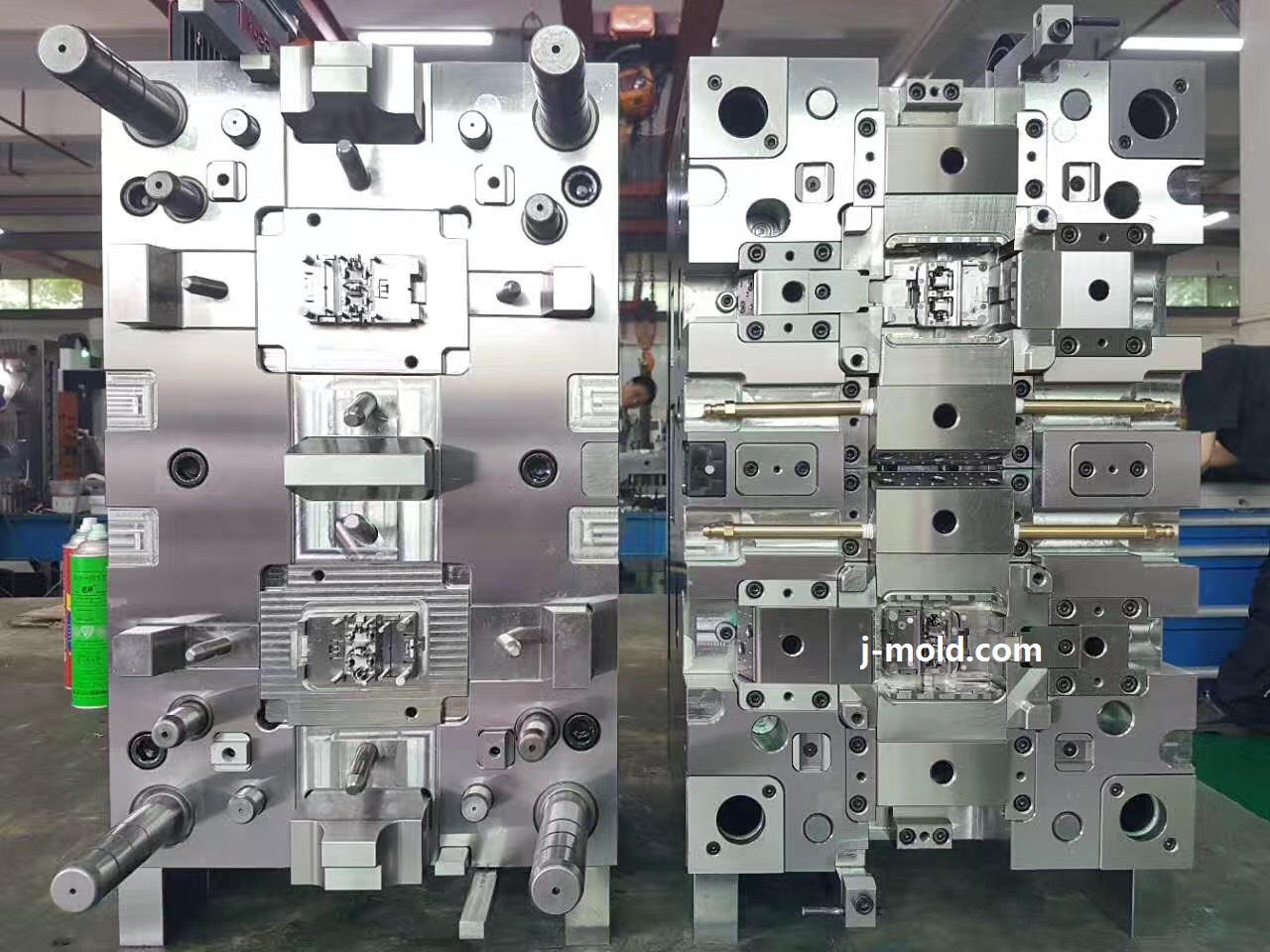
Aid Cooling System Layout: Cooling channels are crucial for cycle time and part warpage. The direction should ensure sufficient space in core areas (e.g., core) for effective cooling circuits.
5. Ensure Part Dimensional Accuracy & Stability
Critical Fit Dimensions: Should ideally be formed within the same mold half to eliminate errors from parting line mismatch.
Reduce Warpage: The opening direction affects plastic flow and fiber orientation, influencing shrinkage and warpage. Generally, large flat surfaces should be parallel, not perpendicular, to the opening direction to minimize differential shrinkage.
II. Specific Steps & Evaluation for Selecting Mold Opening Direction
Follow this workflow for decision-making:
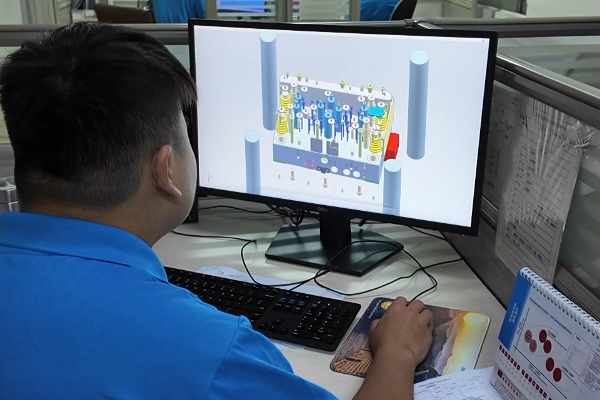
Step 1: Analyze the 3D Part Model
Identify all potential undercuts using draft analysis tools with a preliminary direction.
Identify key features: Mark Class-A surfaces, important mating surfaces, holes/bosses with tight tolerances, surfaces requiring texture or high polish.
Step 2: Determine the "Primary Ejection Direction"
Try using the normal direction of the part's largest projected area as the opening direction. This often yields the simplest mold structure with the shallowest cavity depth.
Evaluate: Under this direction, are key appearance surfaces on the ideal side? Are undercuts many or few?
Step 3: Evaluate & Trade-off
Apply the key requirements from Step 1 to the candidate direction(s) from Step 2, checking each.
If conflicts arise: e.g., a direction satisfying appearance creates multiple undercuts. Prioritize:
Principle 1 (Ejectability) is mandatory but can be compromised by adding side actions.
Principle 2 (Key Surfaces) usually outweighs Principle 4 (Cost), unless cost constraints are extreme.
Common Strategy: Prioritize appearance and function, then devise the simplest possible mold structure to achieve it.
Step 4: Consider Production & Ejection
Balanced Ejection: The part should have adequate "landing areas" along the opening direction for ejector pin placement, ensuring smooth ejection without white marks or pin marks on appearance surfaces.
Insert Placement: If the part requires molded-in inserts, the opening direction should facilitate their placement and positioning within the mold.
III. Practical Tips & Common Scenarios
"Body Up, Ribs Down": For housing parts (e.g., remote, computer base), place the main shell body on the fixed half for appearance, and internal ribs/bosses on the moving half for easier ejection and venting.
Transparent Parts: The entire optical area must be in the same mold half, preferably the fixed half, avoiding any parting lines or weld lines.
Thread Handling: External threads may require sliders; internal threads may require unscrewing cores or collapsible cores. The opening direction should allow the most direct motion for these mechanisms.
Communicate with Client/Product Designer: Often, the ideal opening direction requires minor part design adjustments (e.g., adding draft, tweaking radii or structure). Early communication is crucial.
Summary: Decision Checklist
When finalizing the mold opening direction, quickly ask:
- Can it be ejected? (Any unmanageable undercuts?)
- Is the appearance OK? (Does the parting line damage key appearance surfaces?)
- Is it easy to machine? (Are core/cavity inserts easy for CNC machining/polishing/texturing?)
- Is it easy to eject? (Can ejector pins be evenly placed on non-critical areas?)
- Is it easy to vent? (Are the last-to-fill areas accessible for venting?)
- Is cost controllable? (Are complex side actions needed? Can they be simplified?)
There is no absolutely perfect mold opening direction, only the most balanced solution for the specific project (considering quality, cost, lead time). Experienced mold engineers make intuitive judgments within minutes, based on the comprehensive weighing of these principles.
JBRplas, a leading plastic injection mold manufacturer in Shenzhen, specializes in designing and producing high-precision plastic injection molds.Our commitment to quality and innovation ensures that our molds meet the diverse needs of various industries, delivering reliable and efficient solutions for your manufacturing requirements.