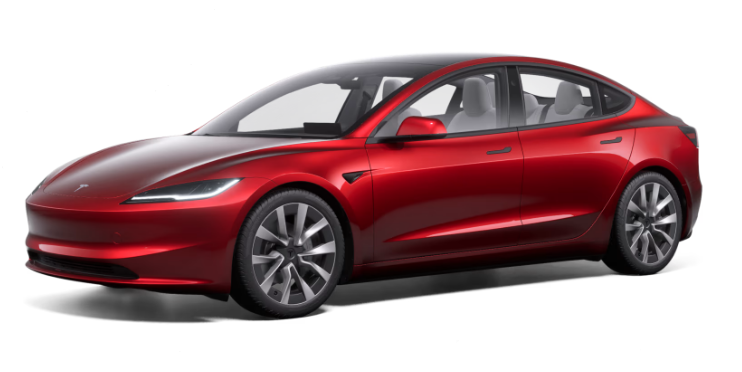
Model 3
The external bumper on a vehicle serves several critical functions, including:
Tesla’s bumper design prioritizes both functionality and visual appeal, with a focus on lightweight composite materials and aerodynamic design, which help reduce drag and improve vehicle efficiency.
Injection molding is a widely used manufacturing process that injects molten plastic into a mold to create parts. For Tesla Model 3’s external bumper, the injection molding process is essential in producing the high-quality, durable, and lightweight materials that form the outer structure of the vehicle. Here’s how injection molding fits into the production of the bumper:
The bumper’s design is complex, requiring high precision to ensure it meets Tesla’s performance and safety standards. Using advanced multi-cavity molds and 3D simulations, the mold design is optimized for producing the bumper's intricate shape, which ensures a high level of dimensional accuracy.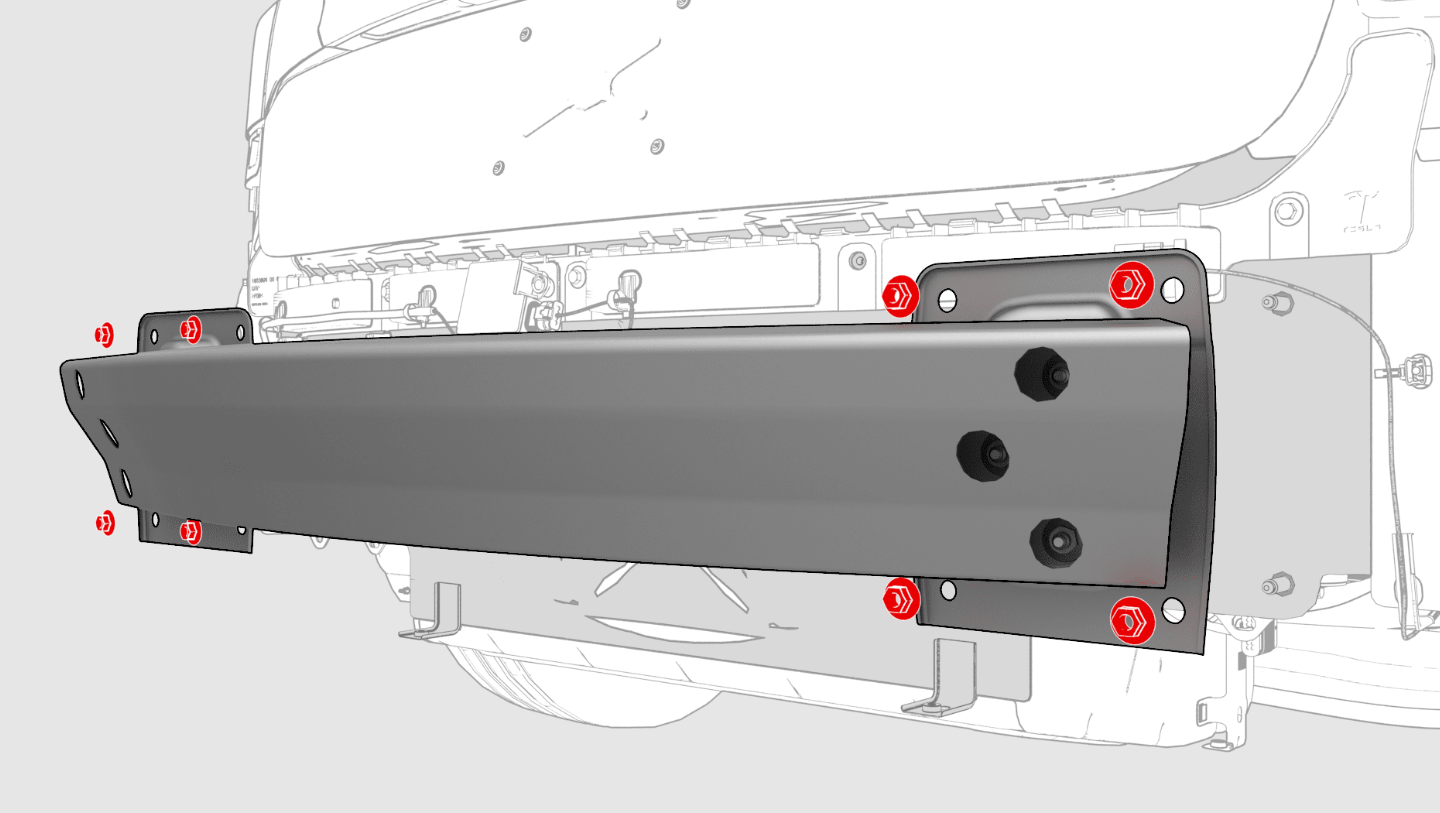
Rear Bumper of Model 3
JBR’s expertise in precision mold tooling enables the creation of molds that can reproduce these complex geometries with high accuracy. The result is an external bumper that not only looks sleek but also functions as intended.
For the Tesla Model 3’s bumper, materials like ABS (Acrylonitrile Butadiene Styrene), polypropylene, and other composite materials are commonly used due to their durability, impact resistance, and lightweight properties. These materials are ideal for injection molding, where the high pressure and precise temperature control ensure that the material flows smoothly into the mold cavity, resulting in parts that are uniform in size, free from defects like sink marks or weld lines.
The cooling process is critical to achieving the correct part dimensions and preventing warping. JBR employs advanced cooling channel systems in their injection molds to optimize the cooling rate, ensuring that the bumper parts maintain their shape and strength. By minimizing cooling time and reducing the chances of thermal distortion, the final product adheres to Tesla’s high standards.
Once the bumper is molded, the next important step is to finish the surface. The aesthetic appearance of the bumper is critical for an automotive product, and it must be smooth, scratch-resistant, and able to withstand harsh environmental conditions.
To ensure the bumper looks sleek and polished, the surface must undergo an even spray coating process. This involves applying a thin, uniform layer of protective paint or decorative coatings to the plastic surface. JBR excels in automated spray coating processes, ensuring that Tesla’s bumper achieves a consistent finish without imperfections.
The bumper must also be protected from UV degradation, chemicals, and physical abrasion. Therefore, applying UV-resistant coatings is an important part of the surface finishing process. JBR’s expertise in biocompatible and durable spray finishes ensures that automotive parts, such as the Model 3’s external bumper, are both aesthetically pleasing and long-lasting, even in harsh environmental conditions.
In a mass-production setting like Tesla’s, quality control is paramount. Ensuring that each bumper meets the exact specifications without defects such as warping, cracking, or color inconsistency is a key part of the manufacturing process.
JBR implements rigorous quality control systems during injection molding, which involve inspecting parts during the molding cycle, as well as conducting post-production testing on finished bumpers. By using Moldflow simulation software, JBR can predict potential defects before the parts are even produced, ensuring that the bumpers come out of the mold free from defects and meet the highest standards.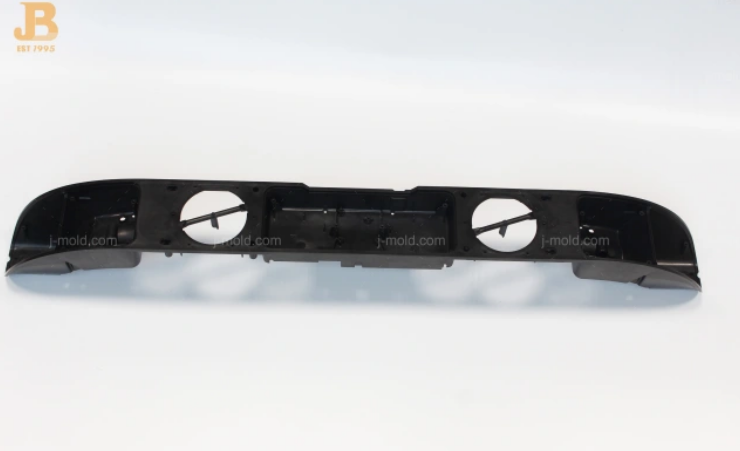
AUTO BUMPER PART produced by JBR
The Tesla Model 3’s external bumper is a perfect example of how modern manufacturing technologies, such as injection molding, precision tooling, and surface finishing, can work together to create high-quality automotive parts. While Tesla relies on its own suppliers and manufacturers for producing such parts, companies like JBR that specialize in injection molding, mold tooling, and spray coating can provide critical support in ensuring that these parts are produced with precision and efficiency.
As Tesla continues to innovate in electric vehicles, injection molding technology, especially in the hands of experienced manufacturers like JBR, will remain essential for meeting both aesthetic and functional needs in automotive production.