POS terminal housings are customer-facing parts in retail environments. Beyond precise fit and durability, they require controlled cosmetic surfaces and consistent anti-static performance to safeguard sensitive payment electronics against ESD damage. For product engineers and molders, balancing visual quality and static protection is a critical challenge in payment device development.
Cosmetic Finish Specifications for POS Housings
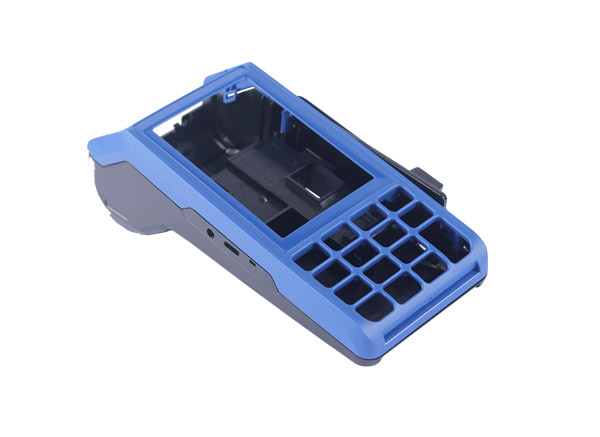
The A-surface of POS casings directly shapes brand impression. All cosmetic standards should be clearly defined in advance to avoid disputes during sampling and mass production. Common surface options and defect rules we follow for POS projects:
- Surface texture options: MT standard matte, VDI texture, fine grain, high-gloss polished finish
- A-surface restriction: no sink marks, flow lines, silver streaks, burn marks, obvious gate vestiges or bubbles
- Surface classification: separate acceptance criteria for A, B and C surfaces
- Color consistency: tight ΔE tolerance for stable batch color matching
A-surface control Mold polishing Gate location optimization
Anti-Static & ESD Performance Basics
Internal PCBs, contactless readers and chip modules inside POS terminals are sensitive to electrostatic discharge. An unexpected ESD event may cause system freeze, data error or permanent component failure.
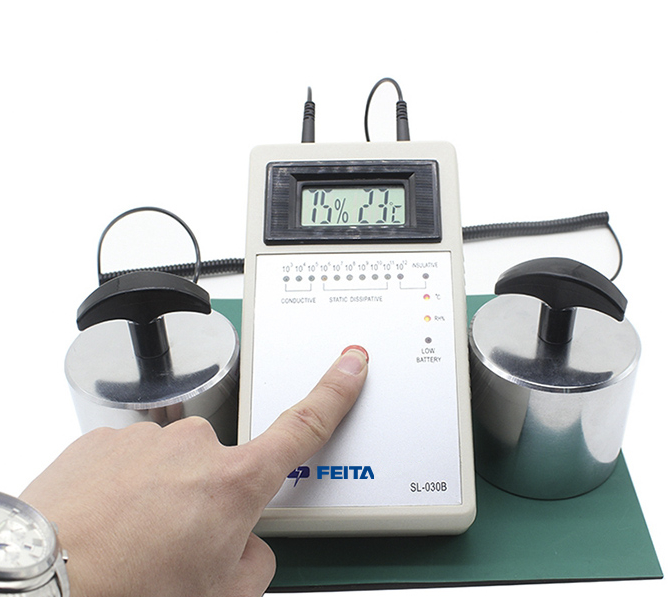
- Typical surface resistance range: 10⁶ ~ 10¹² Ω for dissipative anti-static grades
- Common materials: anti-static ABS, PC/ABS blends, conductive PC, filled engineering plastics
- Compliance test: IEC 61000-4-2, including contact discharge and air discharge
- Long-term stability: anti-static performance must remain effective after abrasion and aging
The Core Tradeoff: Cosmetics vs Anti-Static Fillers
Most conductive additives such as carbon black and carbon fiber can introduce speckles, uneven gloss or limit color choices. This is the most frequent pain point for POS housing projects.
We solve this by material pre-screening, adjusting injection parameters, optimizing venting, or applying secondary anti-static hard coating when the base resin cannot satisfy both requirements.
Mold & Processing Key Points
- Cavity surface finished according to cosmetic drawing requirements; separate texture zones for A/B faces
- Optimize runner and gate design to reduce shear heat, which easily burns filled anti-static materials
- Enhanced venting design: filled resins trap gas more easily and create visible surface blemishes
- Production hardened steel mold to keep texture and dimension stable over high volume runs
Quality Validation Checklist
- Visual inspection under standard lighting for cosmetic approval
- Surface resistivity testing for every incoming material batch
- ESD gun testing following IEC 61000-4-2
- Abrasion, color fastness and environmental aging test
- FAI first article inspection before mass molding release
Many POS projects run into delays at prototype phase because the design team underestimates how anti-static additives change molding behaviour and surface appearance. Early DFM review and material validation save costly mold revisions later.
Get support for your POS housing molding project
Send your 3D files, cosmetic standard sheet and ESD specification for DFM feedback and formal quotation.
info@j-mold.com