Acrylic, valued for its clarity, durability, and versatility, is commonly used in CNC machining and injection molding. These methods allow manufacturers to produce both detailed and large-scale acrylic products with precision and visual appeal. This article explores acrylic's applications in these techniques, comparing their advantages and limitations, and discussing their roles in the industry.
Acrylic in CNC Machining
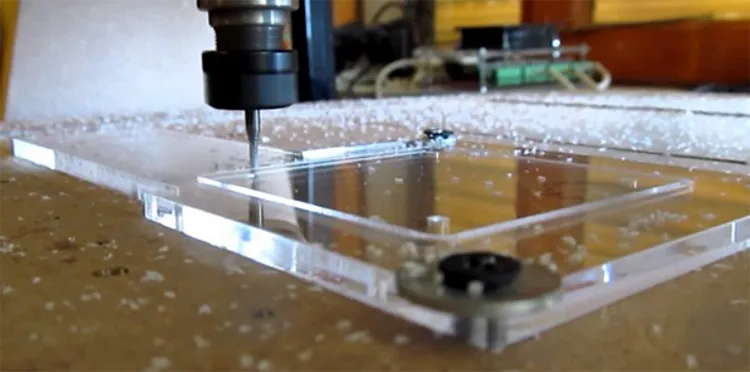
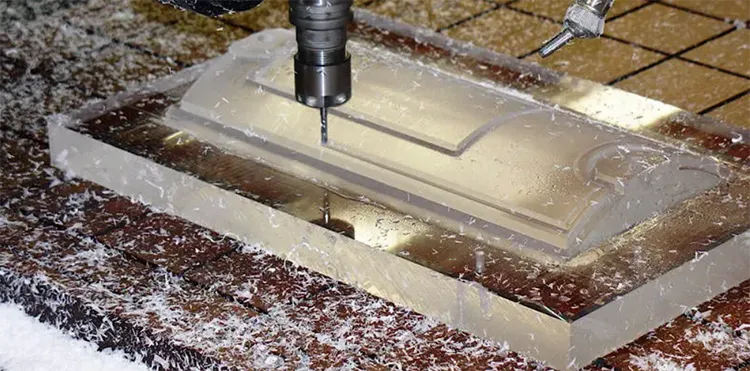
CNC (Computer Numerical Control) machining of acrylic involves using precise tools to carve or mill the material into desired shapes, as illustrated in images 1 and 2. This subtractive manufacturing process is ideal for creating detailed designs and prototypes.
Applications
-
Prototyping:
- CNC machining is commonly used to create acrylic prototypes, enabling manufacturers to test designs before mass production.
-
Custom Components:
- Intricate designs, such as signage, decorative items, and display cases, are often fabricated using CNC machining.
-
High-Precision Parts:
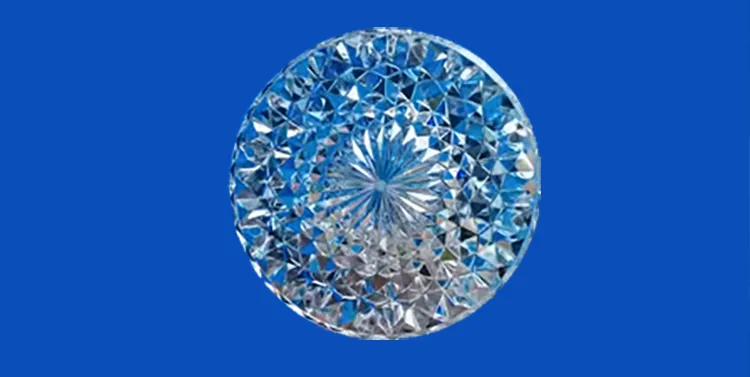
- As shown in image 3, CNC machining achieves detailed patterns and textures, making it suitable for precision engineering.
-
Low-Volume Production:
- CNC machining is preferred for small production runs of acrylic components due to its cost-effectiveness in limited quantities.
Advantages of CNC Machining for Acrylic
- High Precision: Capable of achieving intricate and complex geometries.
- Flexibility: Allows for quick adjustments and design iterations.
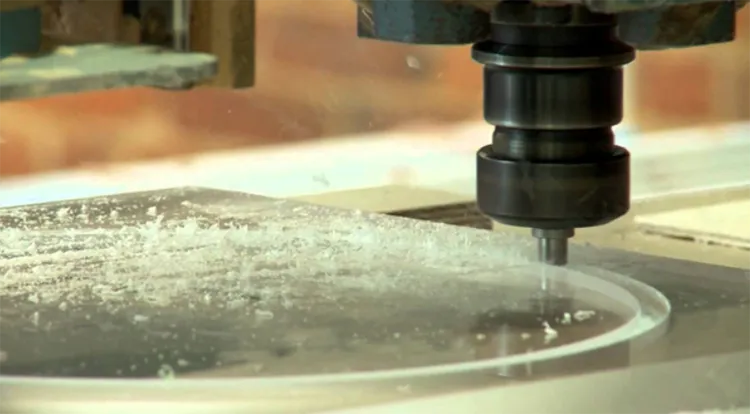
- Excellent Surface Finish: Produces smooth and polished edges, as seen in image 4.
- No Molding Costs: Eliminates the need for expensive molds, reducing upfront investment.
Limitations of CNC Machining for Acrylic
- Material Waste: Subtractive manufacturing generates significant scrap material.
- Longer Production Times: Machining acrylic is slower than molding for larger production volumes.
- Thickness Constraints: Machining thick acrylic can result in uneven surfaces or thermal cracks.
Acrylic in Injection Molding
Injection molding involves injecting molten acrylic into a mold cavity to create parts with precise shapes and dimensions. This process is highly efficient for mass production.
Applications
-
Mass Production:
- Injection molding excels in producing large volumes of acrylic components, such as light fixtures, automotive parts, and medical devices.
-
Transparent Products:
- Items like lenses, covers, and panels benefit from the optical clarity of acrylic achieved through molding.
-
Consumer Goods:
- Molded acrylic is commonly used for products like containers, decorative objects, and furniture components.
Advantages of Injection Molding for Acrylic
- High Efficiency: Ideal for large-scale production with consistent quality.
- Complex Shapes: Capable of creating intricate and detailed designs in a single cycle.
- Cost Per Unit: Economical for high-volume production due to reduced per-unit costs.
- Surface Uniformity: Molding achieves a uniform finish with fewer defects.
Limitations of Injection Molding for Acrylic
- High Initial Costs: Requires significant investment in molds and setup.
- Less Adaptability: Design changes require new molds, increasing costs and lead time.
- Material Challenges: Acrylic’s high viscosity during molding can make it prone to warping and bubbles.
Comparison of CNC Machining and Injection Molding for Acrylic
| Aspect |
CNC Machining |
Injection Molding |
| Production Volume |
Best for low-volume production or prototyping. |
Ideal for high-volume production. |
| Setup Cost |
Low (no mold required). |
High (requires expensive molds). |
| Lead Time |
Short, especially for design modifications. |
Longer due to mold fabrication. |
| Design Complexity |
Excellent for intricate and detailed designs. |
Suitable for complex shapes but limited by mold. |
| Material Utilization |
Higher material waste. |
Minimal material waste. |
| Per-Unit Cost |
Higher for large volumes. |
Lower for large volumes. |
| Surface Finish |
High-quality finish, polished edges. |
Uniform finish but may require post-processing for clarity. |
When to Choose CNC Machining or Injection Molding for Acrylic
JBR: Your Partner in Acrylic Manufacturing
At JBR, we specialize in providing bespoke plastic parts and excel as Plastic Fabrication Specialists. Whether you require CNC-machined acrylic prototypes or injection-molded components for mass production, we offer tailored solutions to meet your specific needs.
As a One-Stop Injection Plastic Parts Provider, JBR ensures:
- Precision and quality in every acrylic component.
- Cost-effective solutions for both small and large production runs.
- Expertise in handling the challenges of acrylic manufacturing.
Conclusion
Both CNC machining and injection molding play vital roles in acrylic manufacturing, each catering to distinct production needs. By understanding their applications, strengths, and limitations, businesses can choose the best method for their projects.
Looking to optimize your acrylic production? Contact JBR today for expert guidance and high-quality solutions tailored to your needs!
FAQs About Acrylic in CNC Machining and Injection Molding
1. What are the common uses of acrylic in manufacturing?
Acrylic is used for prototypes, consumer products, lenses, light fixtures, and decorative items.
2. How does CNC machining compare to injection molding for acrylic?
CNC machining is ideal for low-volume, detailed projects, while injection molding is suited for high-volume production with consistent quality.
3. Can acrylic be reused in CNC machining or injection molding?
In CNC machining, leftover material can be recycled but with limitations. In injection molding, sprues and runners can often be reused.
4. What challenges arise when molding acrylic?
Acrylic’s high viscosity can lead to warping, bubbles, and difficulty in filling complex molds. Proper design and processing help mitigate these issues.
5. Why is acrylic popular in the injection molding industry?
Its optical clarity, durability, and versatility make acrylic an excellent choice for a wide range of products.