Electrical Discharge Machining (EDM) has become an indispensable process in the injection molding industry, enabling manufacturers to create highly intricate and precise mold components. As shown in the images, EDM technology utilizes controlled electrical discharges to remove material with extreme precision. This article will explore how EDM works, its key benefits, and its transformative role in producing complex injection molds.
What is Electrical Discharge Machining (EDM)?
Electrical Discharge Machining, or EDM, is a non-conventional machining process that removes material from a workpiece using thermal energy generated by electrical discharges. Unlike traditional cutting methods, EDM does not rely on physical contact between the tool and the material. This makes it ideal for machining hard metals, intricate shapes, and components with tight tolerances—critical factors in the injection molding industry.
There are two main types of EDM relevant to injection molding:
-
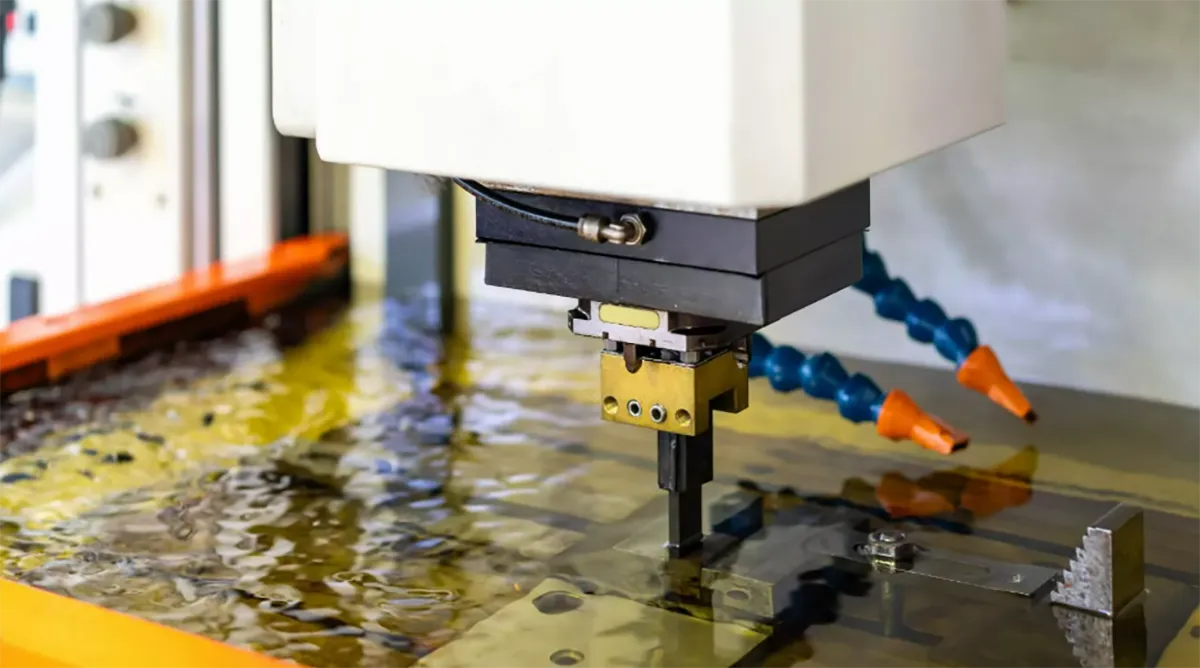
Sinker EDM (Image 1):
- Uses a shaped electrode that sinks into the workpiece to form cavities or intricate geometries.
- Perfect for creating mold cores and cavities for injection molds.
-
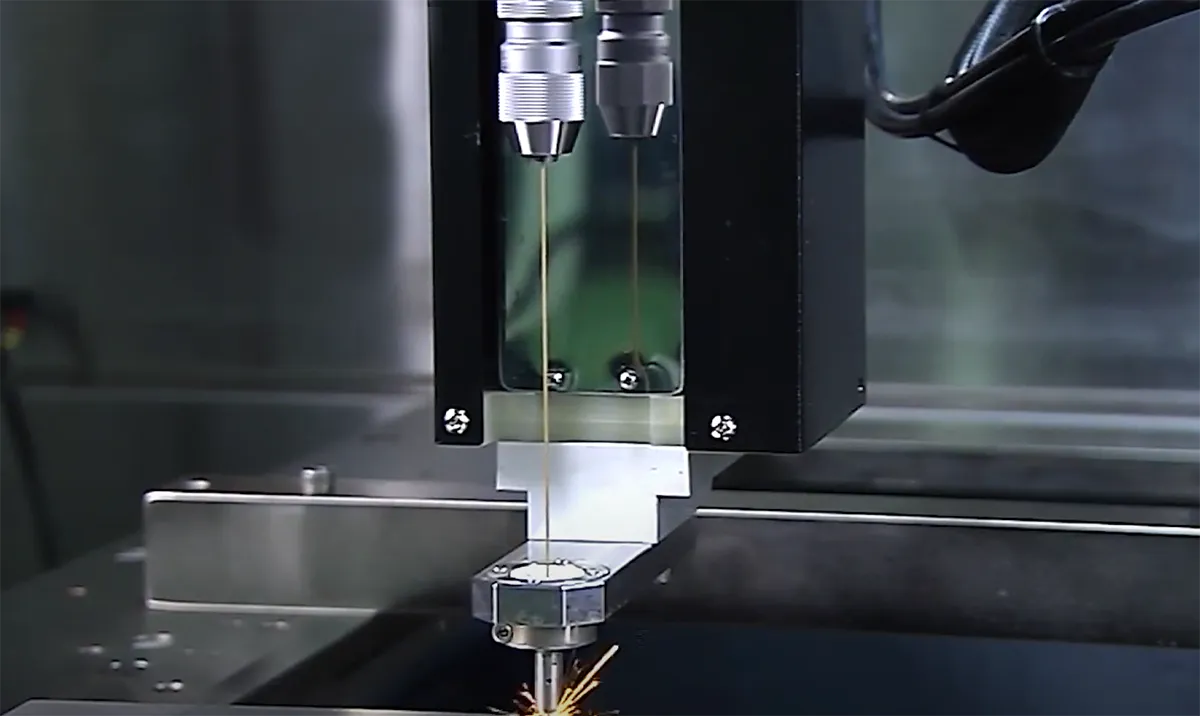
Wire EDM (Image 2):
- Employs a thin wire as an electrode to cut through the material with high precision.
- Commonly used for cutting mold inserts and ejector plates.
How Does EDM Work?
The EDM process operates on the principle of electrical discharge. Here's how it works:
-
Electrode and Workpiece Interaction:
- A conductive electrode (tool) and the workpiece are submerged in dielectric fluid.
-
Controlled Electrical Discharges:
- A high-frequency electrical current passes between the electrode and the workpiece, creating a series of sparks.
-
Material Removal:
- Each spark generates localized heat, melting and vaporizing tiny amounts of material.
-
Cooling and Flushing:
- The dielectric fluid cools the material and flushes away debris, ensuring a smooth surface finish.
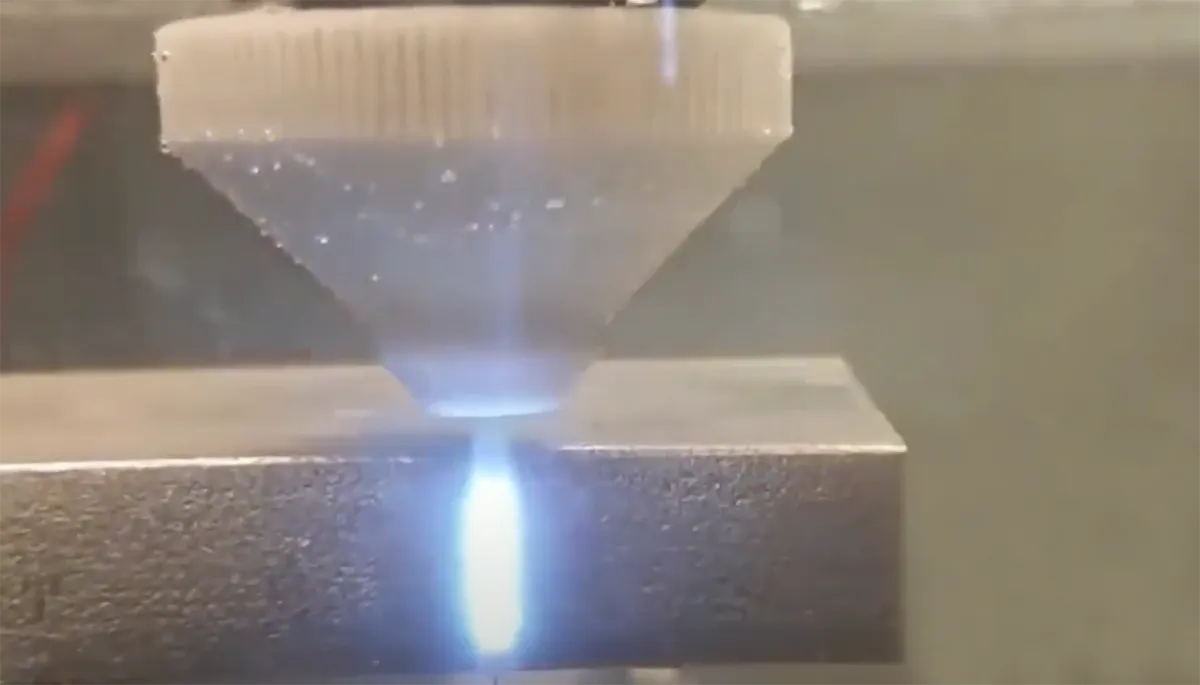
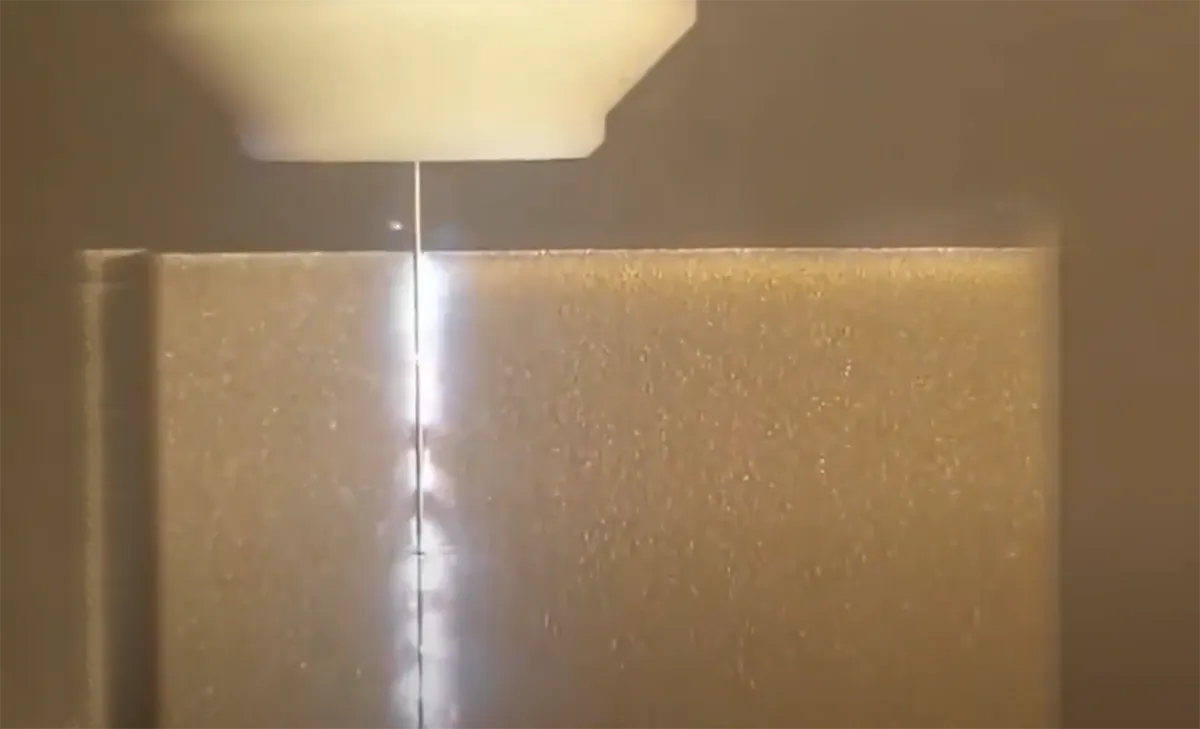
As seen in Images 3 and 4, this process is highly controlled, allowing manufacturers to achieve the intricate details and precise dimensions needed for injection mold components.
Why EDM is Essential for Injection Molding
Injection molds must meet rigorous standards of precision, durability, and complexity. EDM has proven to be a crucial technology in meeting these demands:
-
Machining Hard Metals:
- Materials like hardened steel, used for mold cavities and inserts, are difficult to machine with traditional methods. EDM cuts through these materials effortlessly.
-
Complex Geometries:
- EDM can create intricate shapes, sharp corners, and deep cavities that would be challenging or impossible with other methods.
-
High Precision and Tolerance:
- Injection molds require extreme accuracy to ensure consistency in molded parts. EDM delivers tolerances as tight as ±0.002 mm.
-
Reduced Tool Wear:
- Unlike traditional machining, there is no physical contact between the electrode and the workpiece, reducing wear and extending tool life.
-
Surface Finish Quality:
- The EDM process produces smooth surface finishes, reducing or eliminating the need for secondary polishing.
Applications of EDM in Injection Molding
-
Mold Cores and Cavities:
- Sinker EDM creates the intricate cavities required to form the shapes of plastic parts.
-
Ejector Plates and Inserts:
- Wire EDM is used to cut high-precision inserts and ejector plates, ensuring seamless part ejection during molding.
-
Micromolds:
- EDM excels in producing small, detailed molds for micro-injection molding applications.
-
Prototyping:
- For rapid prototyping, EDM provides a fast and accurate way to produce test molds.
Advantages of EDM for the Injection Molding Industry
-
Design Freedom:
- Enables the creation of intricate and unconventional designs without the limitations of traditional machining.
-
Improved Mold Durability:
- Hardened steel molds created with EDM last longer, reducing maintenance and downtime.
-
Cost-Effectiveness:
- While the initial investment in EDM technology is high, the precision and durability of the resulting molds significantly reduce long-term costs.
-
Versatility:
- Suitable for a wide range of materials, including tool steels, titanium, and copper.
-
Automation Compatibility:
- Modern EDM machines are highly automated, improving efficiency and reducing manual labor.
Challenges and Solutions in EDM for Injection Molding
-
Slow Material Removal Rates:
- EDM is slower than conventional machining, but its precision makes it worthwhile for mold manufacturing.
-
Electrode Fabrication Costs:
- Designing and producing electrodes can be expensive. To mitigate this, reusable and multi-functional electrodes are increasingly used.
-
Complex Programming:
- Advanced CAD/CAM software and skilled operators are required to optimize EDM processes.
JBR: Pioneering Precision in Injection Mold Fabrication
At JBR, we harness the power of EDM to produce high-precision molds for injection molding. As a leading Plastic Fabrication Specialist and One-Stop Injection Plastic Parts Provider, we ensure every mold we produce meets the most stringent quality standards.
Our EDM capabilities allow us to tackle even the most complex mold designs, ensuring the seamless production of bespoke plastic parts. Whether it's prototyping or large-scale production, JBR delivers precision, efficiency, and reliability.
Conclusion
Electrical Discharge Machining (EDM) has revolutionized the injection molding industry by enabling the creation of intricate, precise, and durable molds. As manufacturers continue to demand higher quality and complexity, EDM will remain a cornerstone of modern mold fabrication.
Looking to partner with a precision-driven mold manufacturer? Contact JBR today to learn more about our EDM capabilities!
FAQs About EDM and Injection Molding
1. What materials are commonly machined using EDM in injection molding?
Materials like hardened steel, titanium, and copper alloys are commonly machined using EDM for mold fabrication.
2. How does EDM improve injection molding?
EDM allows for the creation of intricate mold components with tight tolerances and superior surface finishes, ensuring high-quality molded parts.
3. Is EDM suitable for prototyping molds?
Yes, EDM is ideal for creating precise prototype molds, allowing manufacturers to test and refine designs before mass production.
4. What is the difference between wire EDM and sinker EDM?
Wire EDM uses a thin wire to cut through materials, ideal for inserts and plates, while sinker EDM uses a shaped electrode to form cavities and complex geometries.
5. Why is EDM important for micro-injection molding?
EDM's precision makes it essential for creating micromolds, which are used to produce tiny, intricate plastic parts with high accuracy.