In injection molding, two critical factors that determine the quality of the final product are precision and accuracy. While these terms are often used interchangeably, they represent distinct concepts that play unique roles in the manufacturing process. Understanding the difference between precision and accuracy is essential for producing high-quality parts, especially for industries that demand tight tolerances, such as medical devices, automotive components, and electronics.
This article explores the meaning of precision and accuracy, their differences, and their significance in the injection molding process.
What Is Precision in Injection Molding?
Precision refers to the consistency or repeatability of a manufacturing process. In the context of injection molding, precision means producing parts with minimal variation between them, even across multiple production cycles.
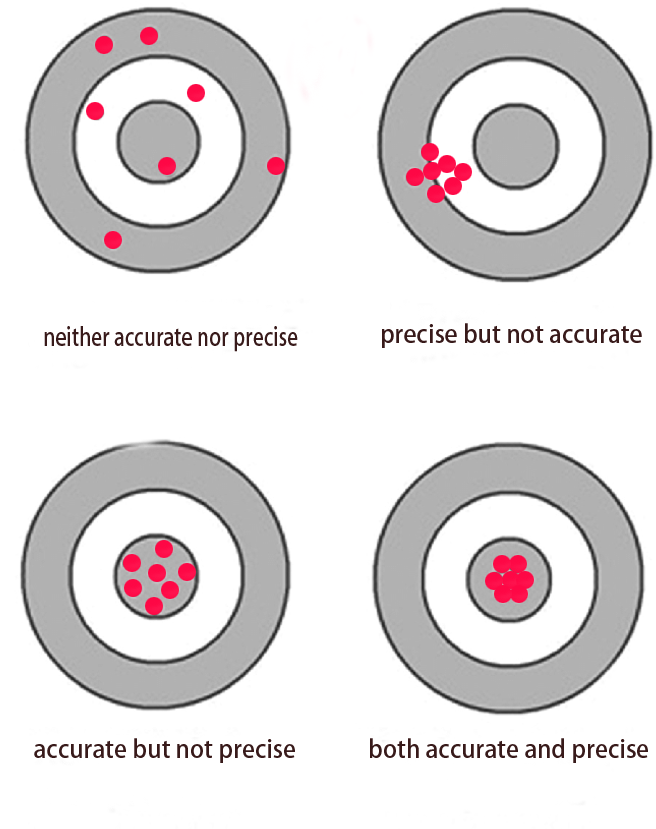
Key Characteristics of Precision:
- Repeatability: The ability to replicate the same dimensions and features in every part.
- Consistency: Ensuring that the output matches the desired specifications across batches.
- Focus: Precision is primarily concerned with the stability of the process, not whether the parts meet the exact target dimensions.
For example, if an injection molding machine consistently produces parts with a diameter of 10.02 mm when the target is 10 mm, the process is precise but not necessarily accurate.
How to Improve Precision:
- Maintain Stable Processing Conditions: Use consistent temperatures, pressures, and cooling times.
- High-Quality Molds: Ensure molds are durable and resistant to wear.
- Advanced Equipment: Modern machines with servo-driven controls provide better repeatability.
- Material Quality: Use uniform and uncontaminated materials to reduce inconsistencies.
What Is Accuracy in Injection Molding?
Accuracy refers to how close a manufactured part is to its intended dimensions or design specifications. In injection molding, accuracy ensures that the part meets the required tolerances and functional requirements.
Key Characteristics of Accuracy:
- Target-Oriented: Accuracy focuses on hitting the exact target dimensions or design parameters.
- Conformity: Ensures that the part aligns with the original CAD design.
- Tolerance: Achieving accuracy often involves staying within a specified range of acceptable deviations.
For example, if the target diameter for a part is 10 mm, and the actual part measures 10 mm, the process is accurate.
How to Improve Accuracy:
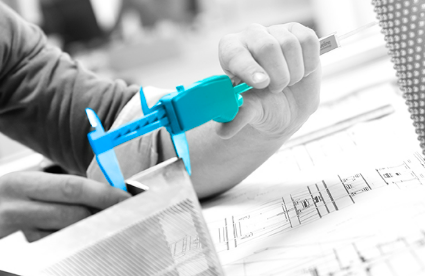
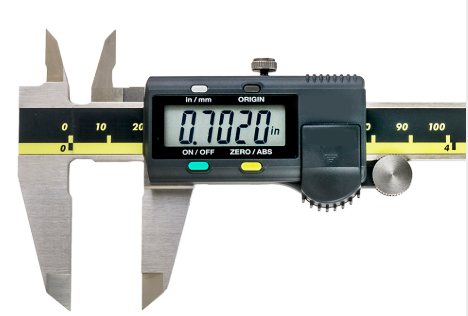
- Calibration of Machines: Regularly calibrate injection molding equipment to ensure it performs correctly.
- Precision Mold Design: Create molds that are dimensionally accurate to the CAD model.
- Optimized Process Parameters: Adjust injection speed, pressure, and cooling time to achieve accurate dimensions.
- Dimensional Inspection: Use tools like CMM (Coordinate Measuring Machine) to verify part dimensions.
The Difference Between Precision and Accuracy
| Aspect |
Precision |
Accuracy |
| Definition |
Consistency in producing identical parts repeatedly. |
Closeness to the target dimensions or design specs. |
| Focus |
Stability and repeatability of the process. |
Conformity to the required tolerances. |
| Impact on Quality |
Reduces variation between parts in a batch. |
Ensures functionality and design compliance. |
| Example |
Producing parts that are consistently 0.2 mm oversized. |
Producing parts that are exactly the target size. |
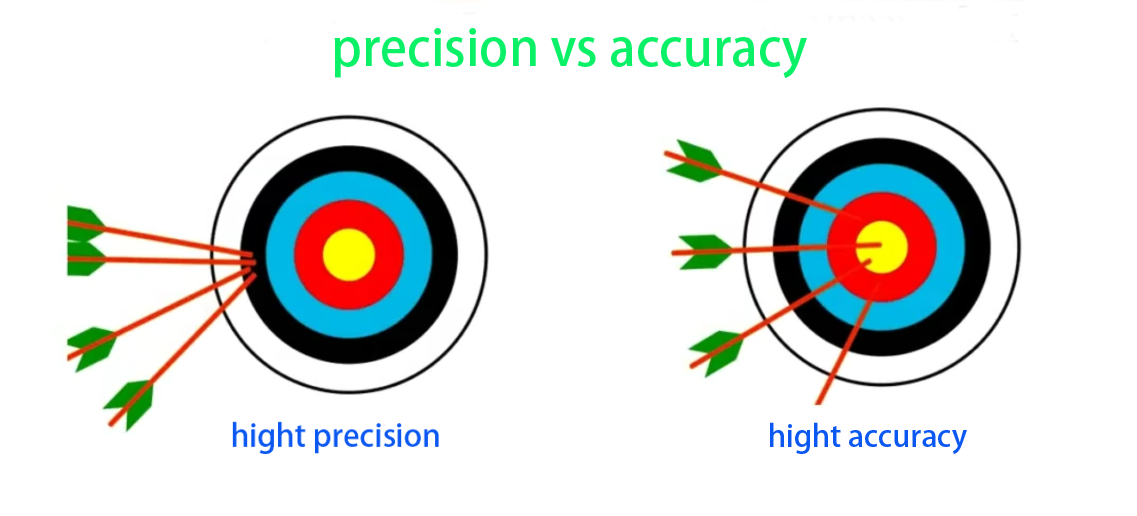
In ideal scenarios, the injection molding process achieves both precision and accuracy. However, a process can be precise but inaccurate, or accurate but imprecise, depending on the conditions.
Significance of Precision and Accuracy in Injection Molding
Why Precision Matters:
- Cost Efficiency: A precise process reduces material waste and the need for rework.
- Consistency: Precision ensures uniformity in parts, which is critical for assembly processes.
- Reliability: Customers value consistent quality, especially in mass production.
Why Accuracy Matters:
- Functionality: Accurate parts meet their intended design requirements, ensuring proper function.
- Customer Satisfaction: Accurate parts align with the client's expectations and design specifications.
- Regulatory Compliance: Many industries, such as medical and automotive, require strict adherence to tolerances.
How JBR Ensures Both Precision and Accuracy
At JBR, we excel in delivering bespoke plastic parts by combining precision and accuracy in our manufacturing processes. As Plastic Fabrication Specialists, we implement advanced technologies and stringent quality control measures to meet the most demanding requirements.
What Sets JBR Apart:
- High-Quality Molds: Designed and fabricated to achieve dimensional accuracy and repeatability.
- State-of-the-Art Machines: Our servo-driven and CNC-controlled machines ensure consistent performance.
- Expert Team: Our engineers fine-tune every parameter for optimal precision and accuracy.
- Inspection Capabilities: We utilize advanced inspection tools like CMM and optical scanners to validate quality.
Whether you need high-precision parts for electronics or accurate components for medical devices, JBR delivers unparalleled quality.
FAQs: Precision vs. Accuracy in Injection Molding
1. Can a process be precise but not accurate?
Yes, a process can consistently produce parts with the same dimensions (precision) but not meet the target size (accuracy).
2. Why are both precision and accuracy important in injection molding?
Precision ensures consistency, while accuracy ensures the part meets design specifications. Both are critical for high-quality production.
3. How does JBR improve precision and accuracy?
JBR uses advanced machinery, precision mold designs, and rigorous quality checks to achieve both precision and accuracy in every part.
4. What tools are used to measure accuracy in injection molding?
Common tools include digital calipers, coordinate measuring machines (CMM), and optical scanners.
5. What industries require the highest precision and accuracy?
Industries such as medical devices, automotive, aerospace, and electronics demand strict precision and accuracy due to the critical nature of their components.
Have Questions? Contact JBR Today!
If you're looking to achieve the perfect balance of precision and accuracy in your injection molding projects, contact JBR. With years of expertise and cutting-edge technology, we deliver customized solutions tailored to your specific needs.